Best Pans for Baking a Whole Chicken: What Works and Why
Table of Contents
- Introduction: Why Sheet Pan Matters
- What to Look for in a Pan for Baking Whole Chicken
- Top Pan Types for Baking Whole Chicken
- Can You Use These Pans for Chicken Breasts or Thighs?
- Baking a Whole Chicken in a Bundt® Pan
- Tips for Best Results When Baking Chicken
- Final Thoughts: Choosing What Works for You
- FAQ: Baking Whole Chicken and Choosing the Right Pan
Introduction: Why the Right Pan Matters
Baking a whole chicken is one of the easiest ways to feed a family or guarantee leftovers you’ll actually be excited about. But while the recipe might be simple, the pan you choose can make or break the final result. Too shallow and you risk splatter and uneven cooking. Too cramped and you’ll end up with soggy skin and a dry center. Not exactly the roast chicken dreams are made of.
The right pan sets you up for success from the start. It helps distribute heat evenly, allows air to circulate so the skin gets crisp, and keeps cleanup from becoming a post-dinner punishment. In this guide, we’ll break down the best pans for baking a whole chicken, what features actually matter, and which tools make the process easier, so you get juicy meat, golden skin, and fewer dishes to deal with.
What to Look for in a Pan for Baking Whole Chicken
Choosing a pan for baking a whole chicken isn’t about grabbing the biggest thing you own it’s about finding the right balance of size, material, and heat performance.
Depth and size: Needs room for airflow and drippings.
A good chicken pan needs enough depth to catch drippings without crowding the bird. You want space for airflow around the chicken so heat can circulate evenly, which is key for crisp skin. Too tight, and the chicken steams instead of roasts.
Material: Aluminum vs. Stainless Steel: Pros and Cons.
Aluminum pans heat quickly and evenly, making them lighter, easier to lift, and more responsive in the oven. Stainless steel is durable and great for stovetop-to-oven cooking, but it doesn’t conduct heat as efficiently on its own. For oven roasting, aluminum tends to deliver more consistent browning.
Heat distribution and airflow
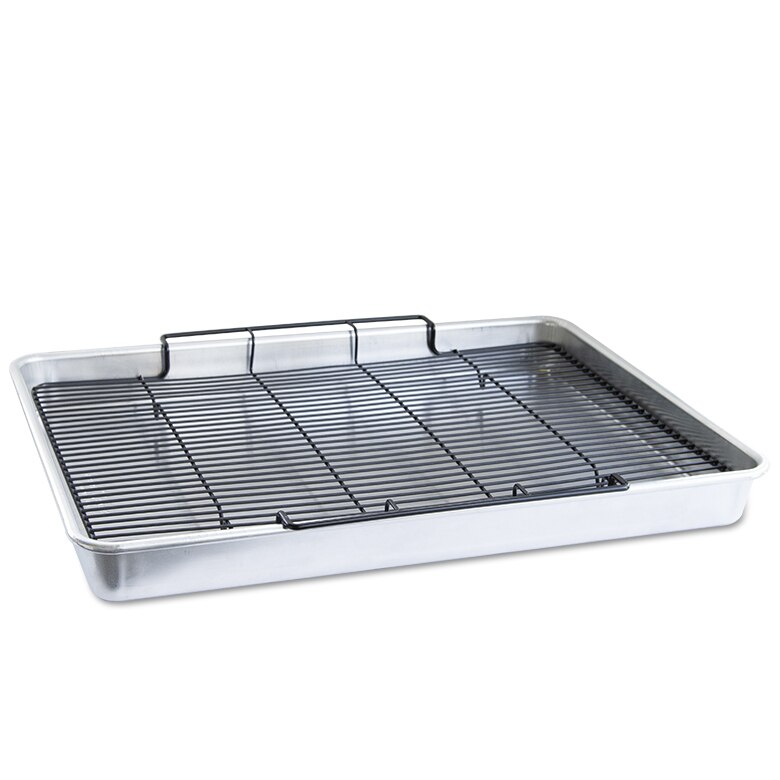
Even heat is non-negotiable when roasting poultry. Pans that allow air to circulate especially those designed for elevated roasting help render fat and crisp the skin instead of trapping moisture underneath. This is where options like the Extra Large Oven Crisp Baking Tray really shine, offering airflow without sacrificing stability.
Top Pan Types for Baking Whole Chicken
Roasting Pans
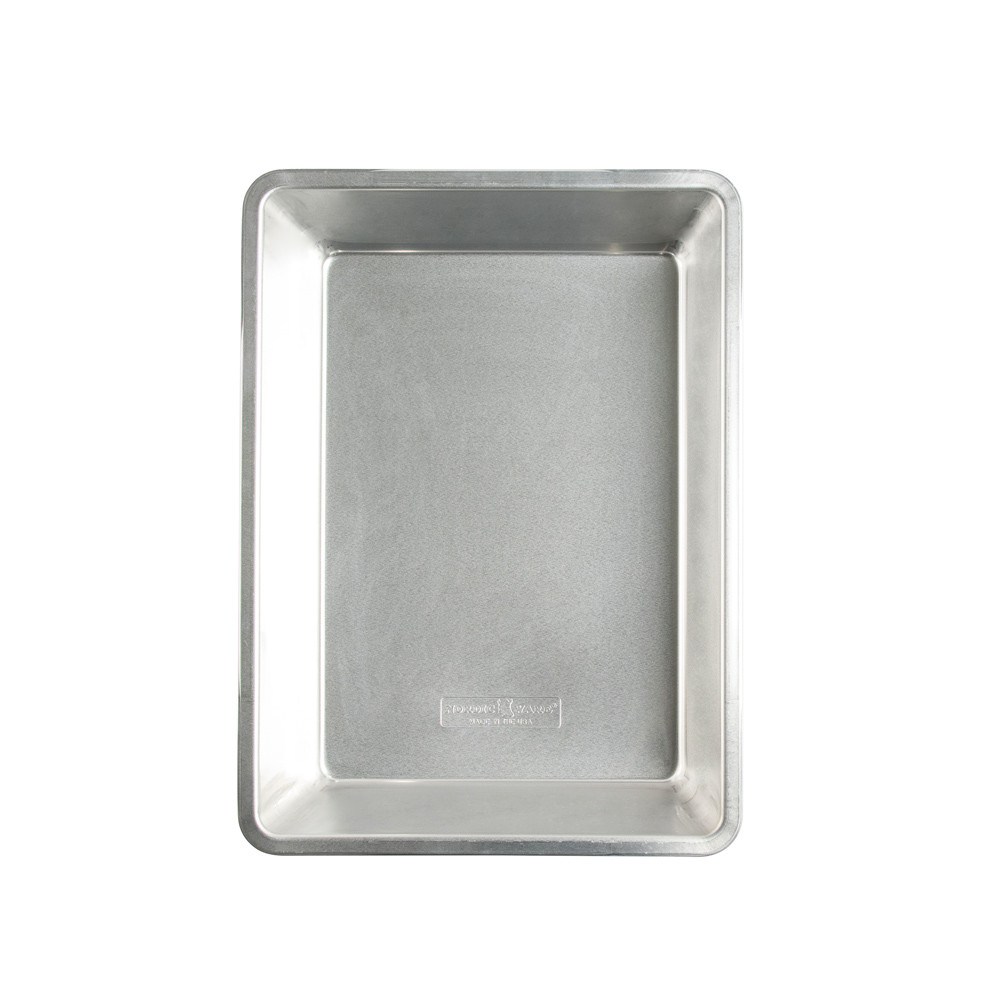
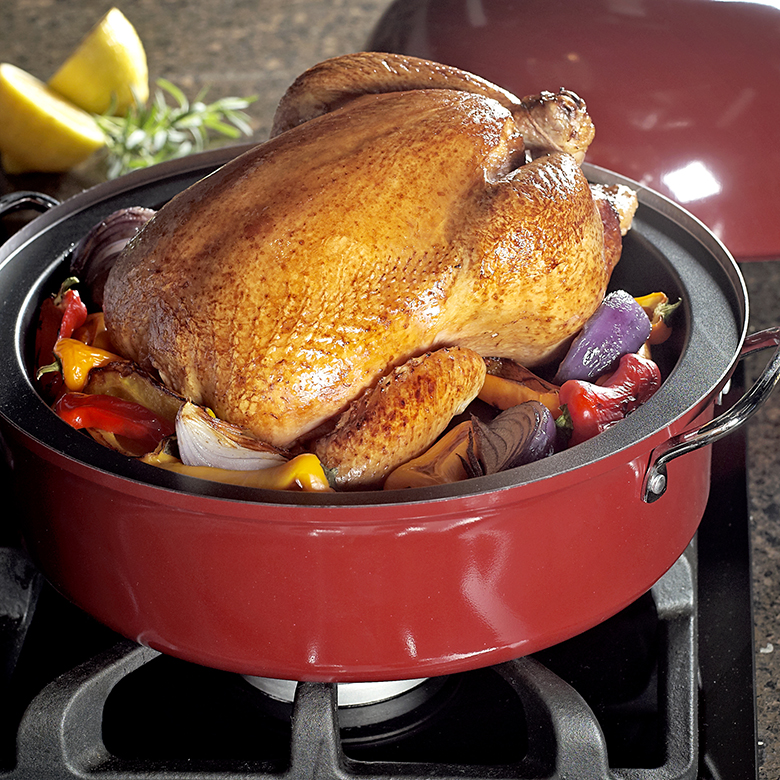
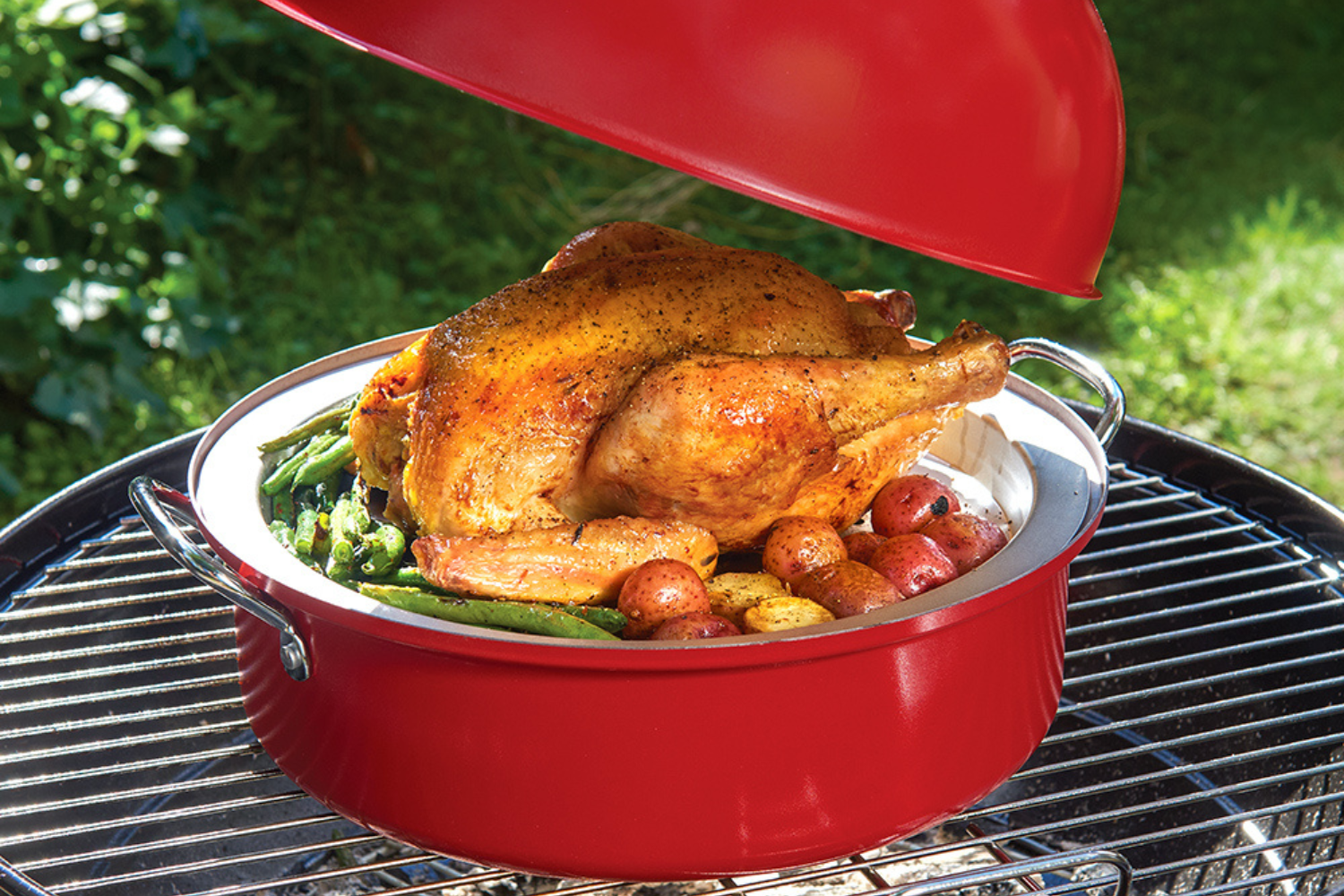
Roasting pans are the classic choice for a reason. They’re deep, sturdy, and built to handle whole chickens, larger roasts, and all the drippings that come with them. The depth keeps your oven clean while giving the chicken enough room to roast evenly.
Using a rack inside the pan lifts the chicken slightly, allowing heat to circulate underneath for better browning. Without a rack, the pan still performs well especially if you’re adding vegetables to roast in the drippings. Roasting pans are ideal for family dinners, meal prep, and holiday meals when you need reliability and capacity.
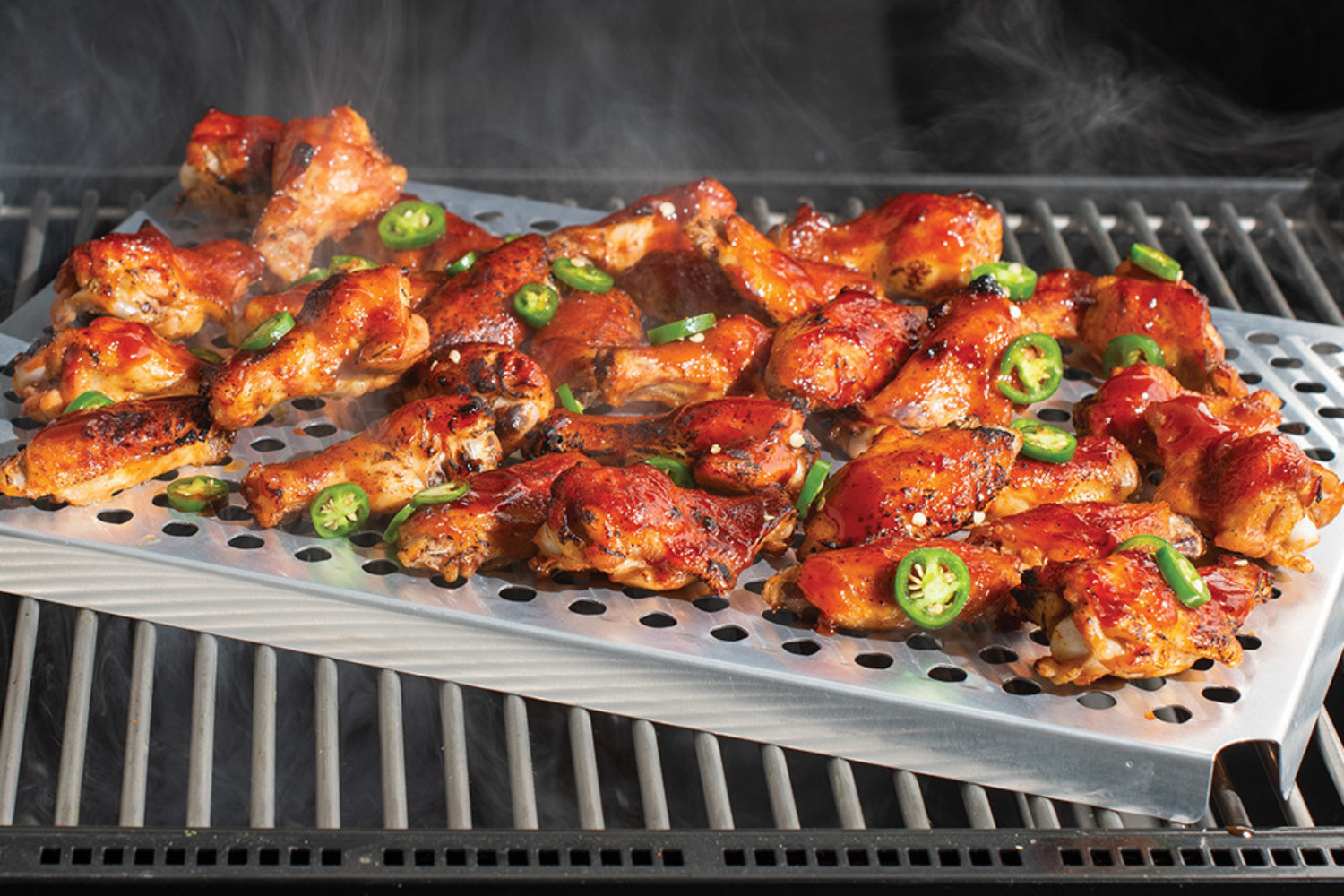
Oven Crisp Baking Trays
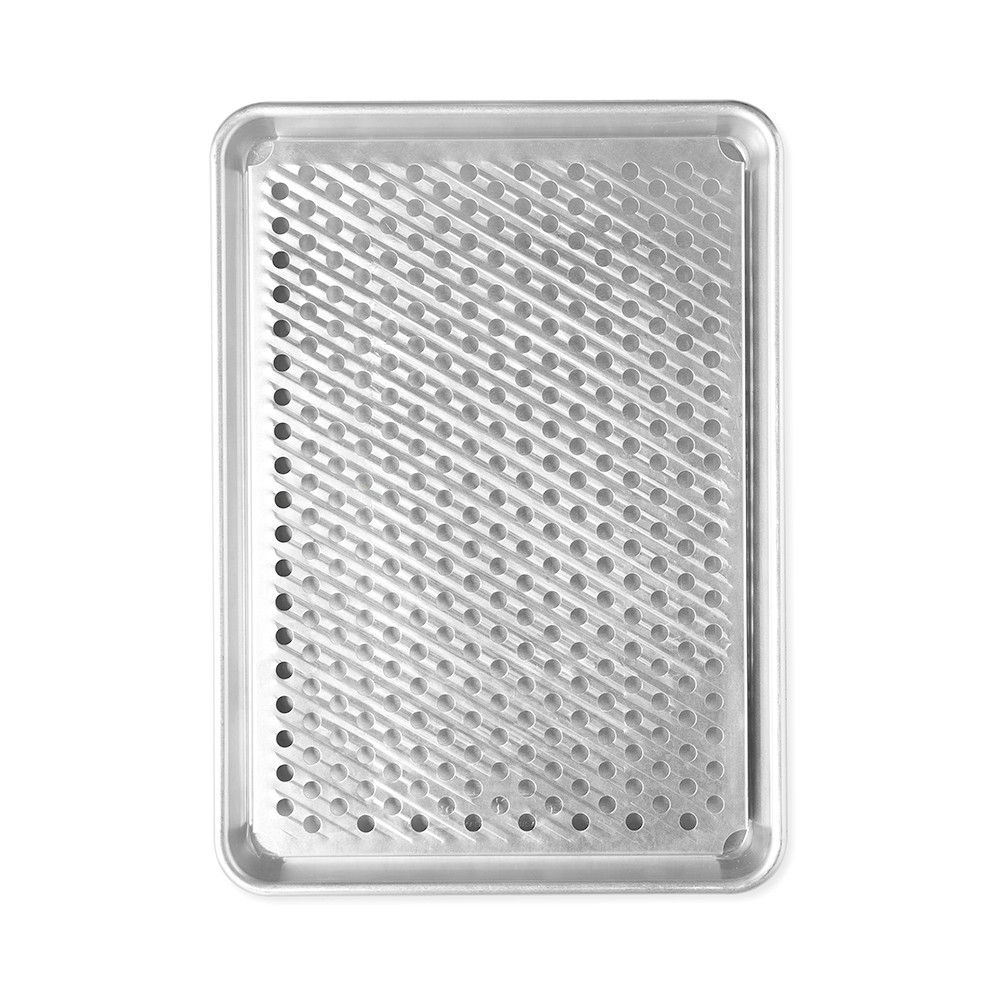
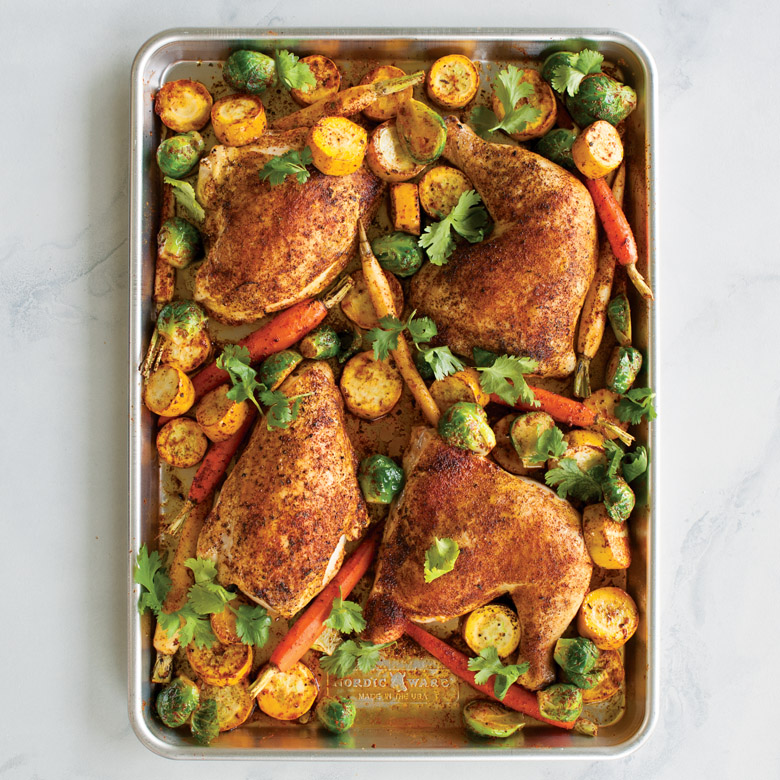
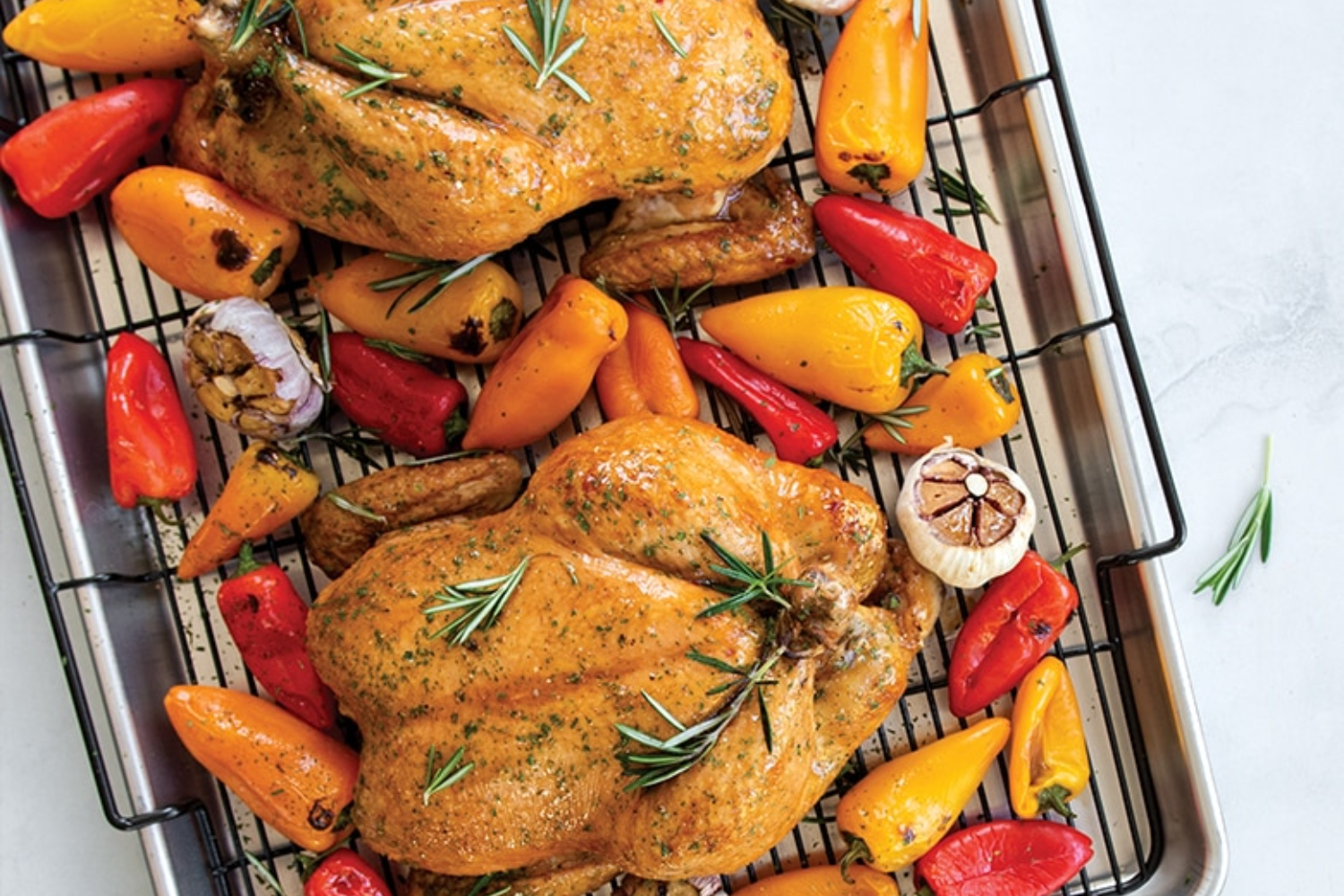
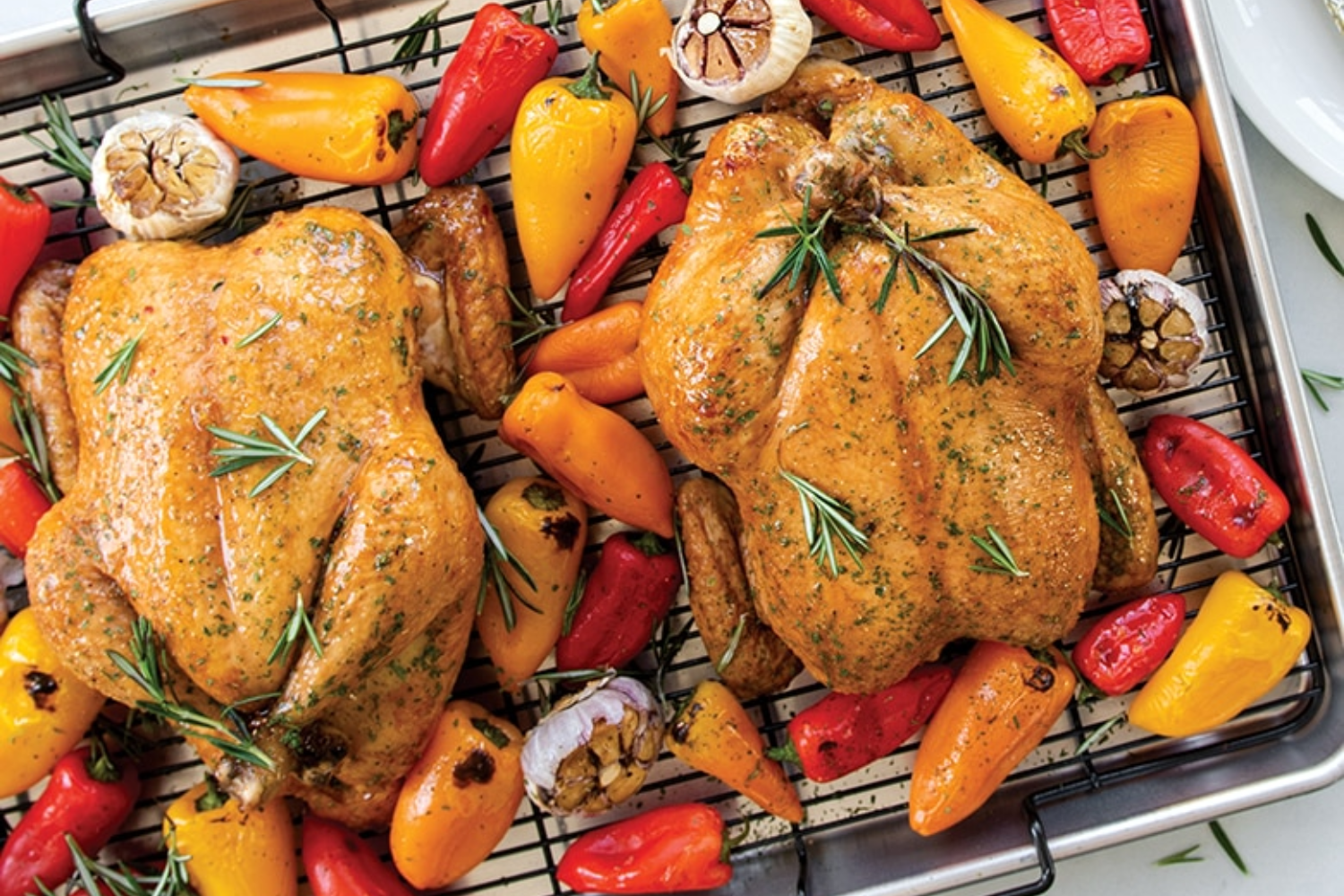
If crisp skin is your top priority, oven crisp trays deserve serious consideration. These trays use a raised rack design to allow air to flow completely around the chicken, making them especially great for spatchcocked birds or chicken cut into pieces.
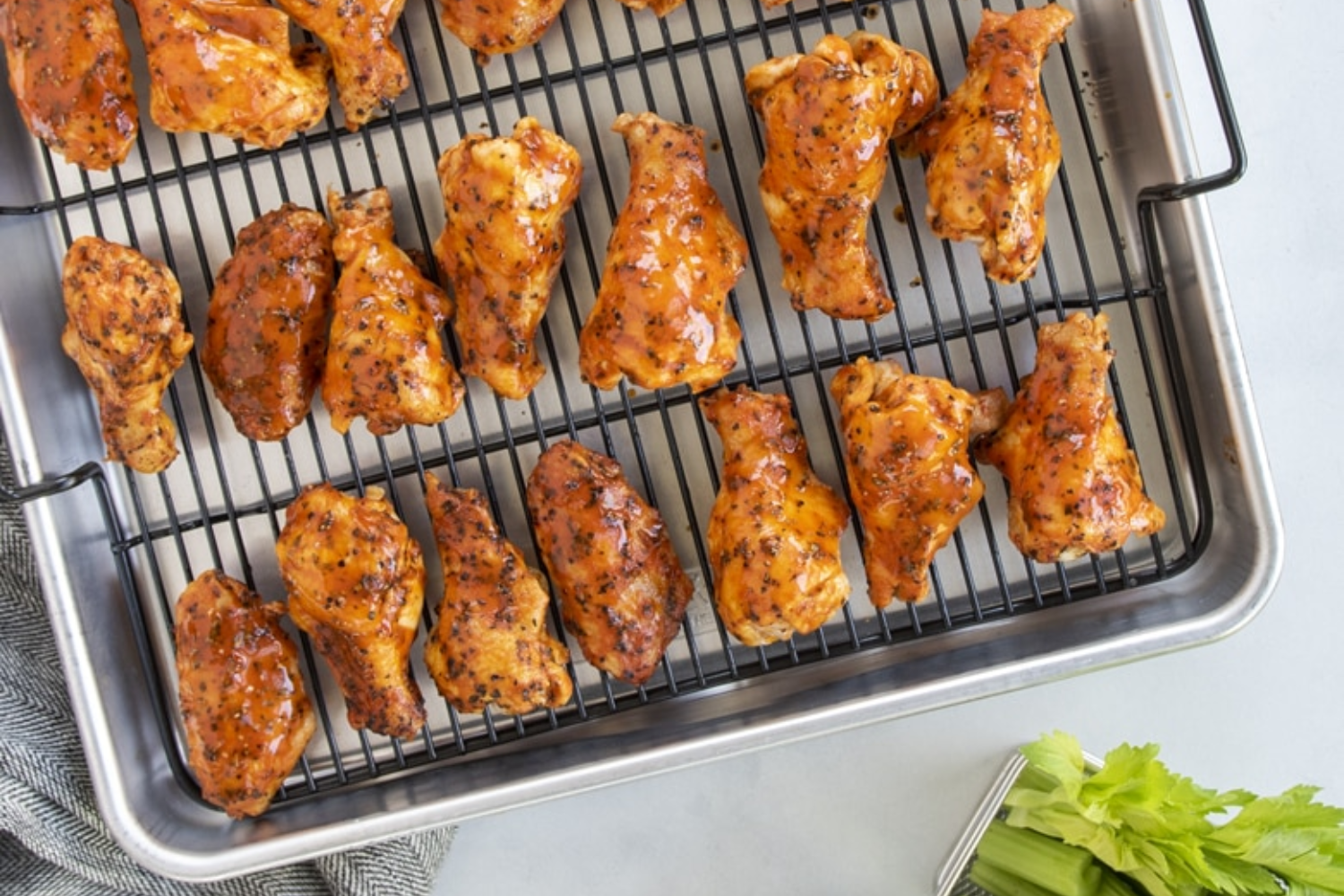
The result? Even browning, rendered fat, and skin that actually crackles when you cut into it. Cleanup is easier, too, since grease drips away from the chicken instead of pooling underneath. The Naturals® Half Sheet with Multi-Purpose Oven & Cooling Rack is a versatile option that works for whole chickens, wings, and vegetables alike that promotes even airflow for crispier foods and faster cooling with easy clean up.
Vertical Roasters
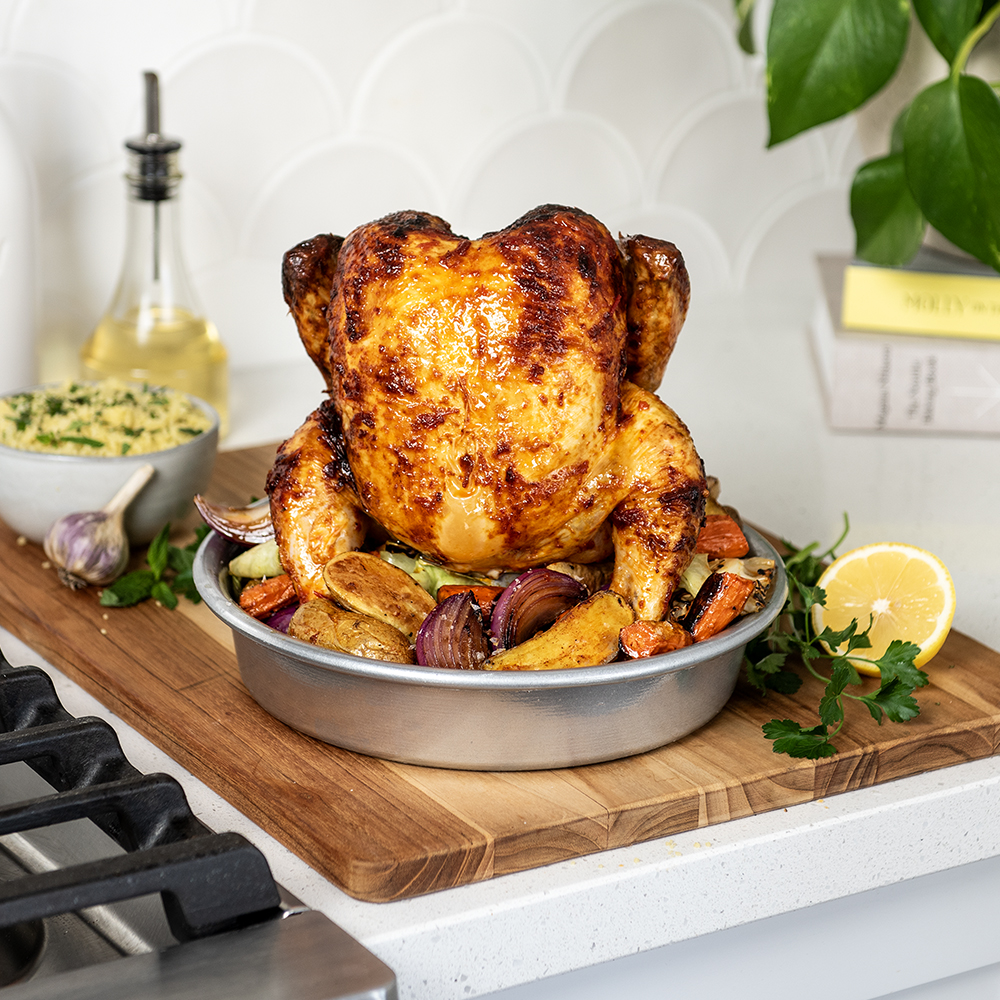
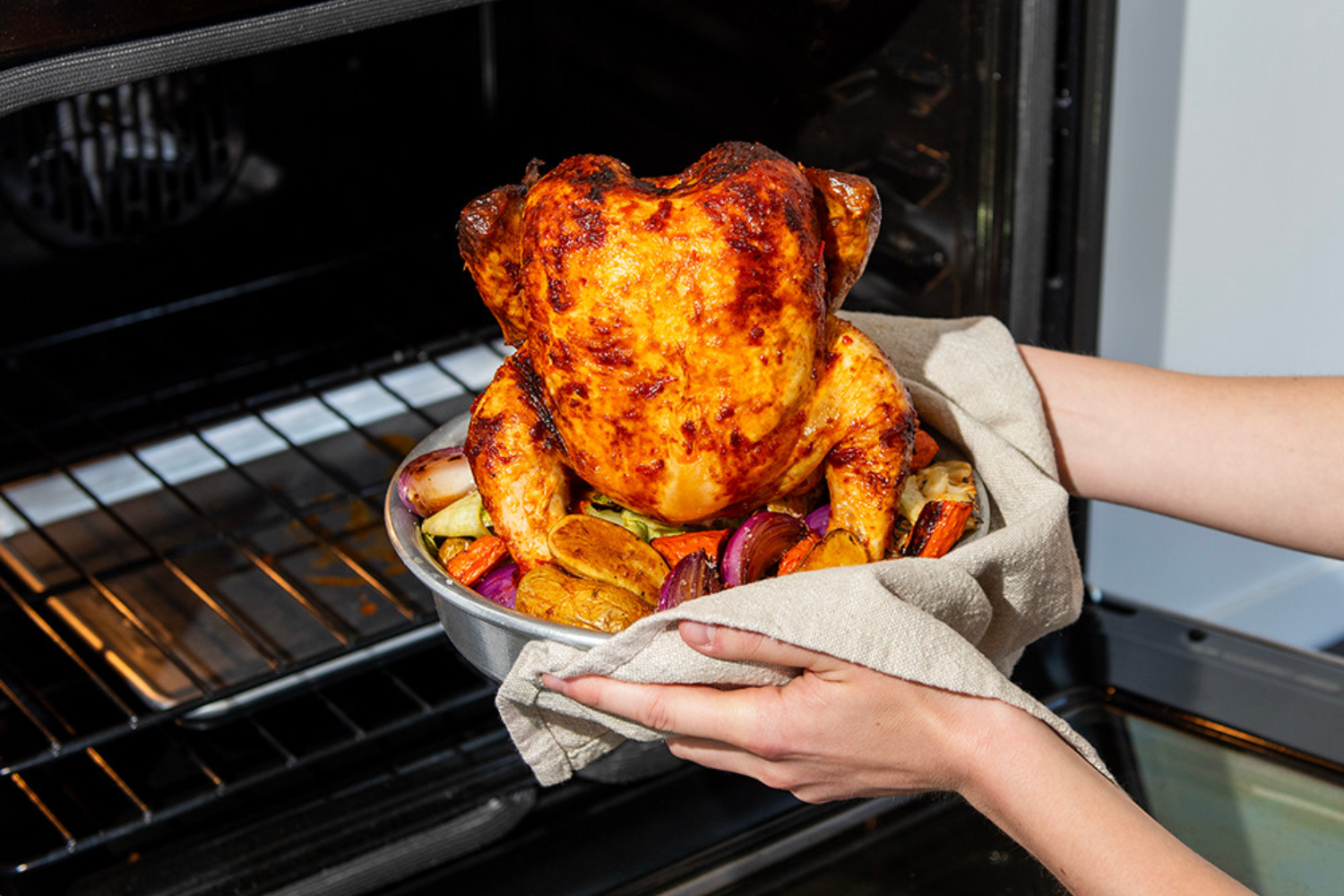
Vertical roasters are compact, clever, and surprisingly effective. By holding the chicken upright, they allow heat to circulate evenly around the entire bird while letting fat drip away, reducing sogginess and promoting even browning.
They’re especially useful for smaller ovens or cooks who want consistent results without a large footprint. A Vertical Chicken Roaster is a simple, USA-made tool that delivers evenly roasted chicken with minimal fuss and frees up oven space for sides.
Can You Use These Pans for Chicken Breasts or Thighs?
Absolutely. One of the biggest perks of investing in a quality roasting pan or crisping tray is versatility. The same pans that handle a whole chicken beautifully also work for chicken breasts, thighs, drumsticks, or mixed cuts.
Using a rack helps elevate skin-on pieces for better browning, while lining the pan with foil can make cleanup easier for saucy or marinated cuts. These pans promote even cooking and better moisture retention, so chicken stays juicy instead of drying out. Whether you’re cooking for one or prepping protein for the week, the right pan pulls double (or triple) duty.
Baking a Whole Chicken in a Bundt® Pan
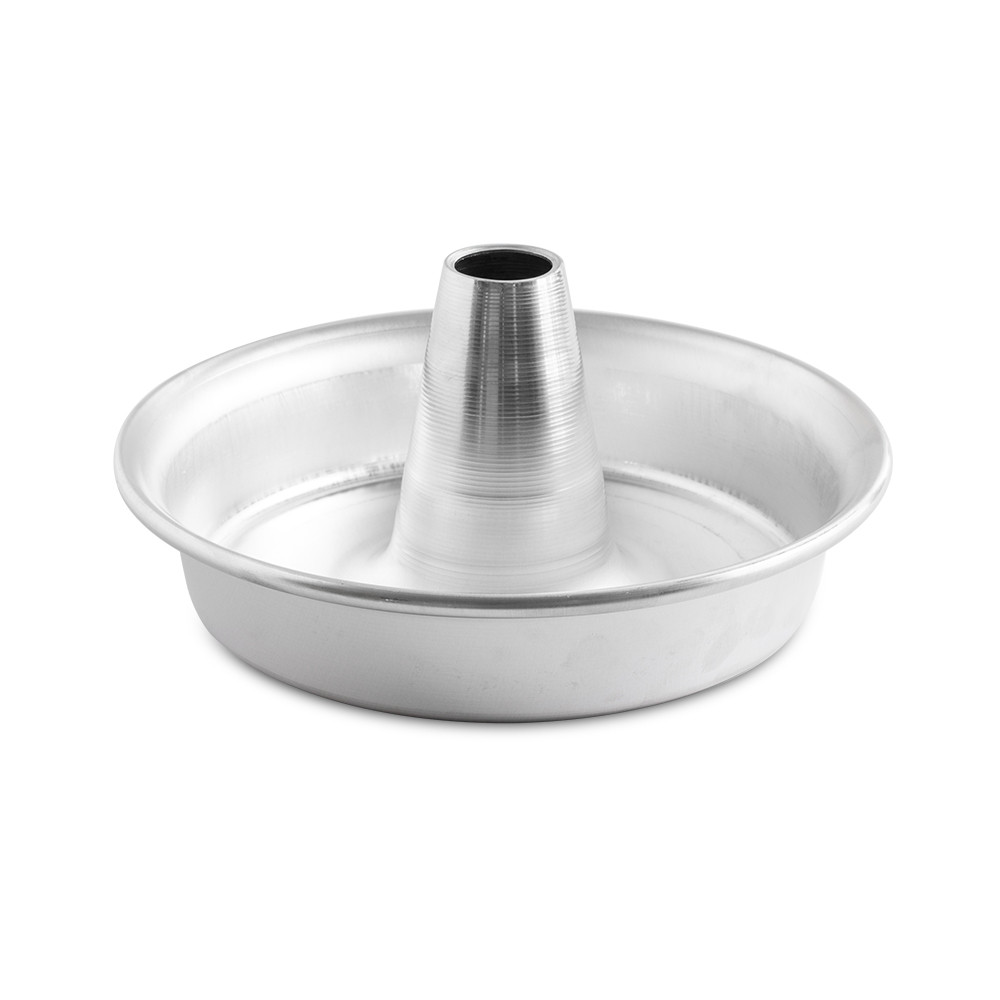
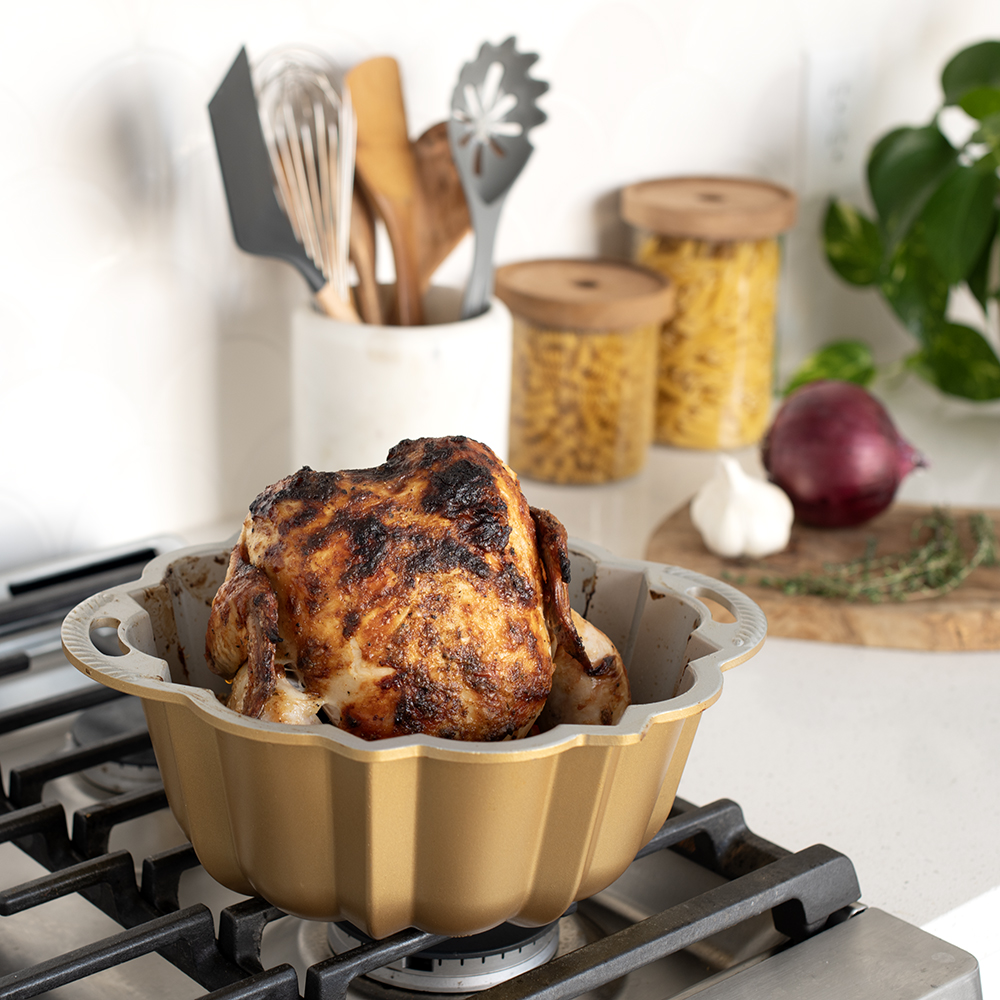
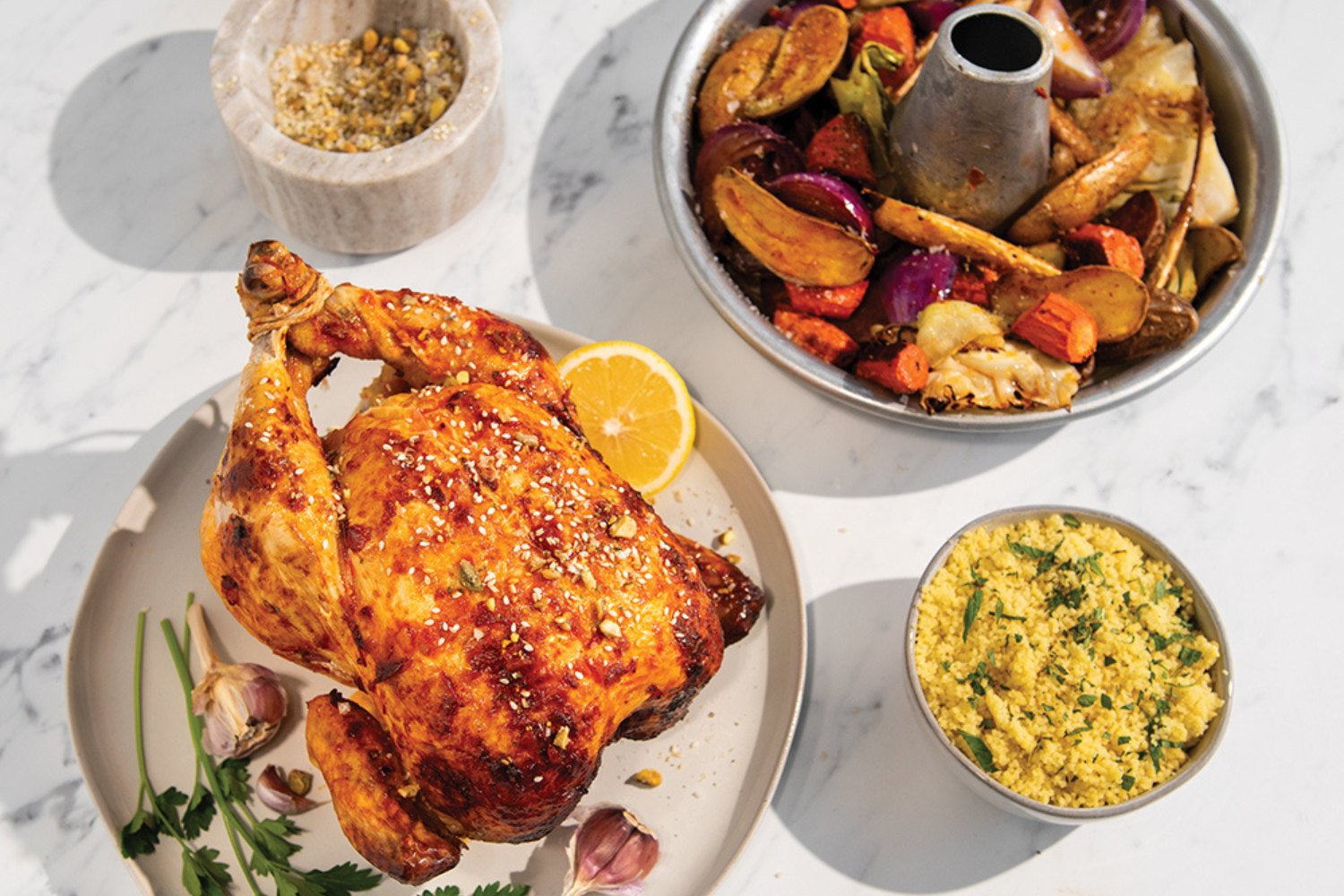
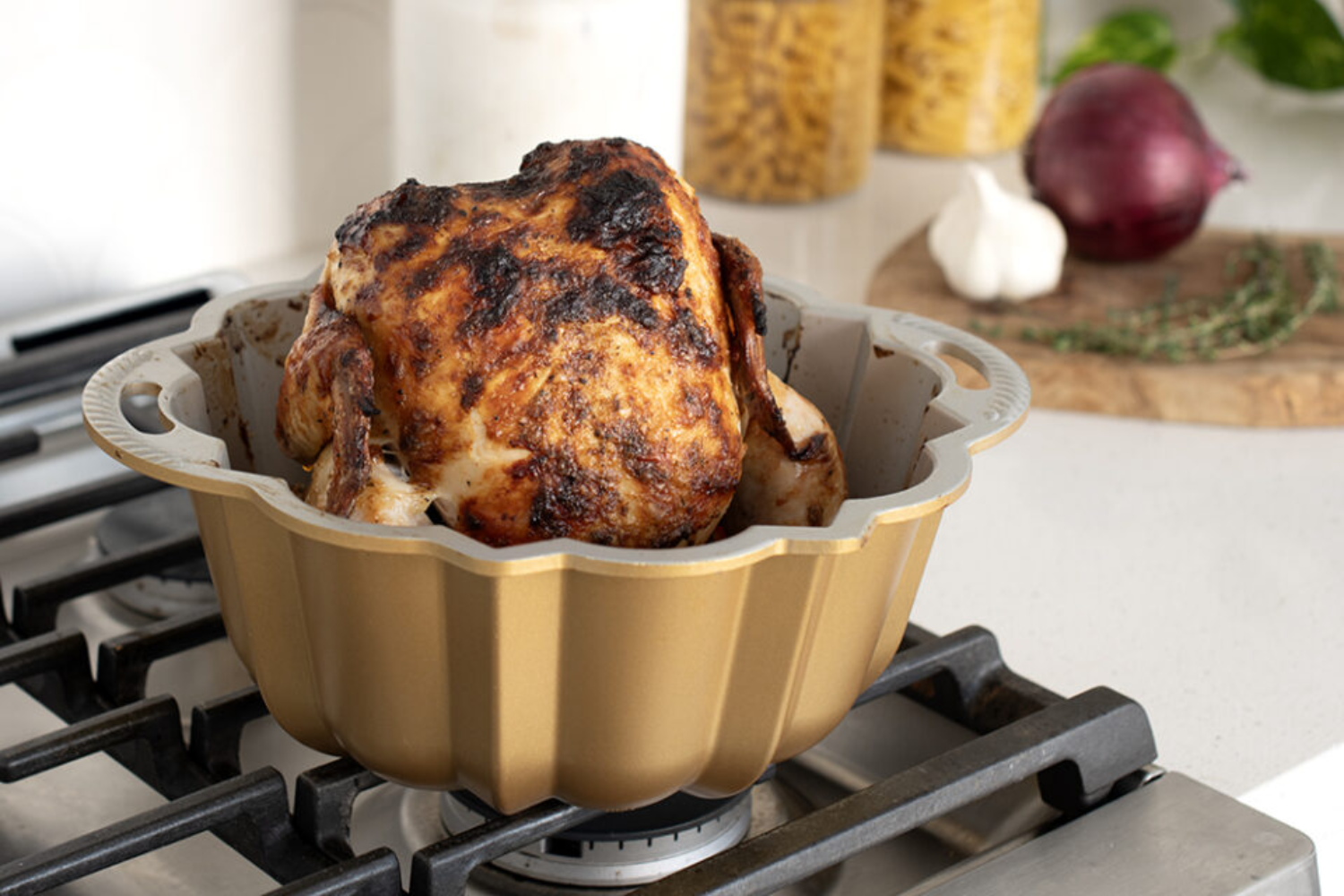
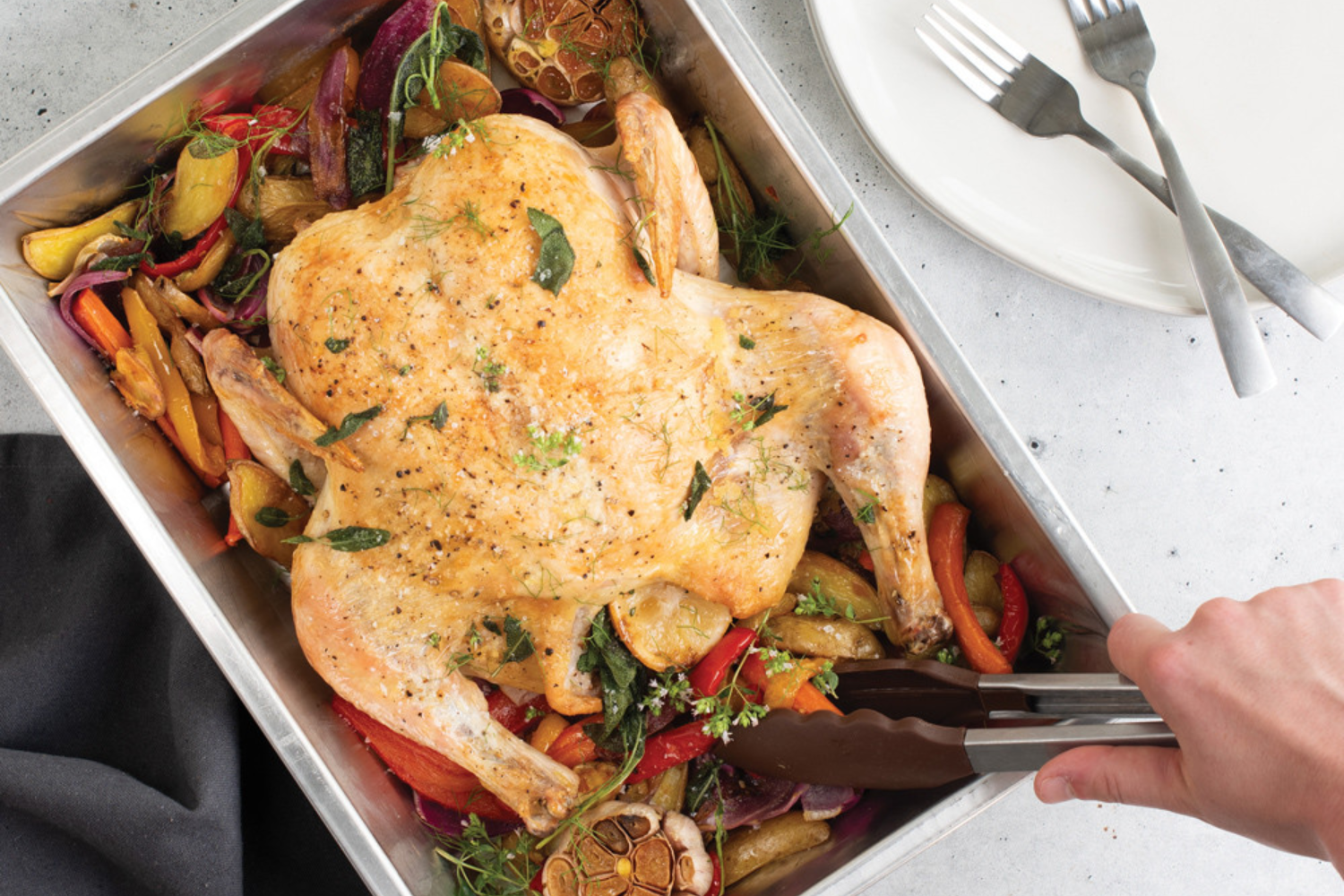
For a less conventional but surprisingly effective option, a Bundt® pan can double as a whole chicken roaster. The center tube naturally elevates the chicken, allowing heat to circulate evenly while excess fat drips away, helping the skin roast up crisp and golden. Surrounding the bird with vegetables turns it into a true one-pan meal, with everything soaking up those flavorful drippings as it cooks. It’s a clever solution if you don’t have a traditional roasting pan on hand or if you’re looking to maximize airflow without extra racks. You can see exactly how it works in the Bundt® Pan Roasted Chicken and Vegetables recipe, which walks through the technique step by step.
Tips for Best Results When Baking Chicken
A great pan does a lot of the work, but a few smart habits seal the deal.
Always use a meat thermometer to check doneness; guessing leads to overcooked chicken more often than not. Let the chicken rest for 10–15 minutes before slicing so the juices redistribute instead of running out onto the cutting board.
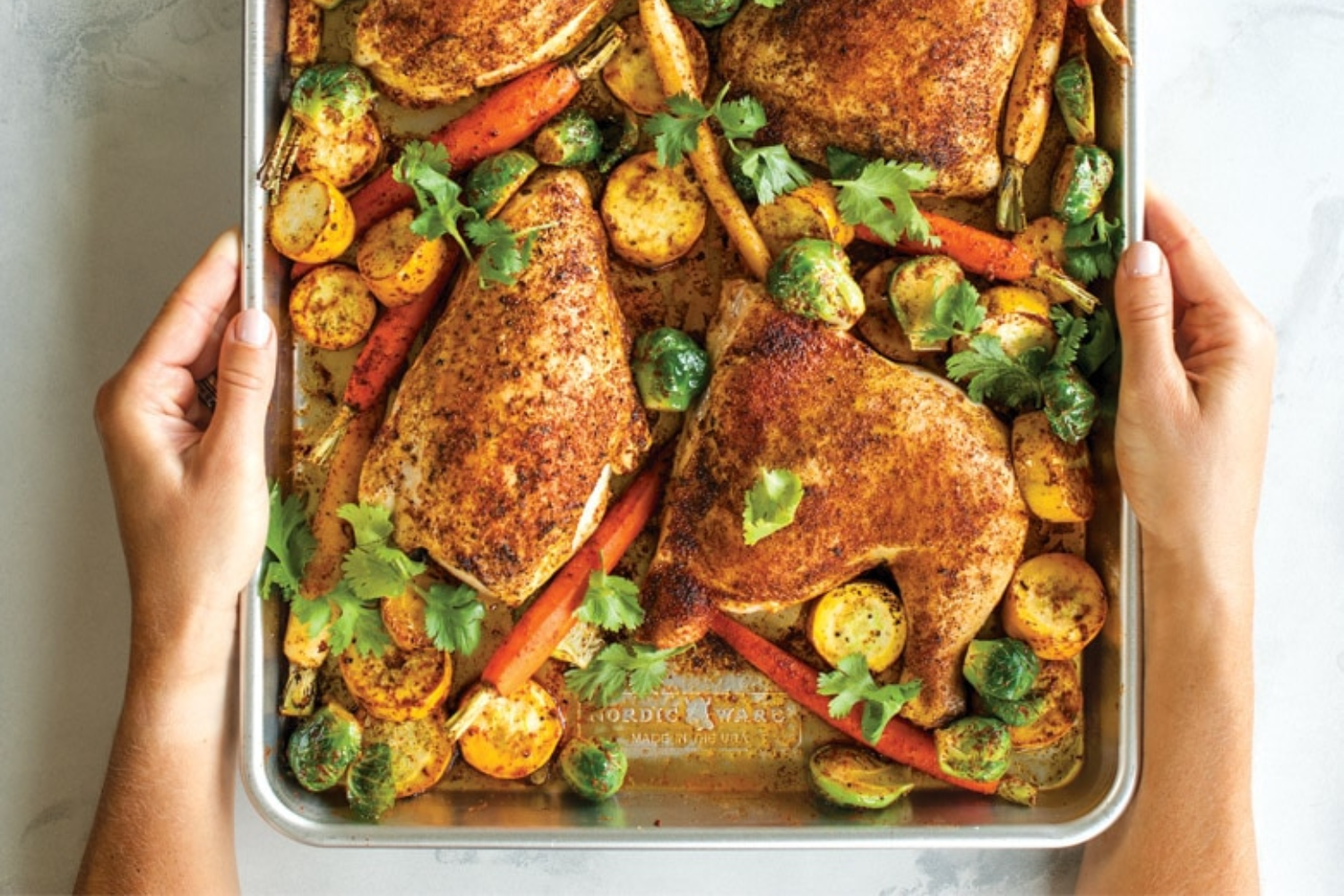
Avoid overcrowding the pan, which traps steam and prevents browning. And don’t be afraid to turn your roast into a one-pan meal where potatoes, carrots, or brussels sprouts cook beautifully alongside chicken when given enough space.
With the right pan and a few simple tips, baking chicken can become a go-to weeknight or weekend favorite. Explore our collection of USA-made roasting and crisping pans here.
Final Thoughts: Choosing What Works for You
The right pan makes baking a whole chicken easier, cleaner, and far more consistent. When heat is even and airflow is right, you get better flavor, crispier skin, and less mess to deal with afterward.
Quality, made-in-the-USA pans, like those from Nordic Ware, are built to perform over time, not just look good on the shelf. Choose the pan that fits your oven size, cooking style, and the cuts of chicken you cook most often. Once you’ve got the right setup, roasting chicken becomes less of a project and more of a pleasure.
FAQ: Baking Whole Chicken and Choosing the Right Pan
What is the best pan for baking a whole chicken?
The best pan is one that gives the chicken room to breathe, catches drippings, and promotes even heat distribution. A deep roasting pan with a rack is a classic choice, while an oven crisp tray elevates the bird for maximum airflow and skin crisping. Look for materials like aluminum for fast, even heating, or stainless steel if you want durability and versatility for stovetop-to-oven cooking. Bonus: Pans that are easy to lift and dishwasher-friendly save you from post-dinner regret.
Can I bake a whole chicken in a baking tray?
Yes, especially if it’s rimmed and roomy. A rimmed baking tray can handle the juices and fat, preventing messes in your oven. For best results, place the chicken on a rack or layer vegetables underneath so the meat doesn’t sit in its own juices and the skin crisps up nicely.
Is it better to bake chicken at 350 or 400 degrees?
Both temperatures work, but 400°F is your friend if crispy skin is the goal. It roasts the chicken faster while keeping the inside juicy. If you prefer slow-roasted flavor, 350°F is gentler, giving the meat time to tenderize, but you may sacrifice a bit of crunch.
Can I use the same pans for baking chicken breasts or thighs?
Absolutely. The same roasting pans, oven crisp trays, or vertical roasters work beautifully for smaller cuts. Just adjust cooking times, and consider using racks or foil to prevent sticking. Even heat and proper airflow will give you juicy, well-browned results no matter the cut.
Do I need to cover a whole chicken while baking?
Not unless you’re intentionally steaming it. Leaving it uncovered lets the skin crisp, the fat render, and the bird brown evenly. Covering is only useful if the chicken starts to over-brown before it’s cooked through.
How do I know when the chicken is done?
Invest in a meat thermometer, it’s the easiest way to avoid overcooked or undercooked chicken. The thickest part of the thigh should reach 165°F, and juices should run clear. Rest the bird for 10–15 minutes after pulling it from the oven to let juices redistribute for maximum juiciness.