The Best Bundt® Pan for Beginners: What to Look For and Why It Matters
There’s something magical about turning a simple cake batter into a stunning dessert with nothing more than the right pan. Bundt® cakes have an elegant, bakery-worthy appearance, but despite their impressive presentation, they’re surprisingly beginner-friendly, as long as you start with the right bakeware.
Many first-time bakers assume that Bundt® cakes are difficult because of their intricate shapes. In reality, most baking mishaps have less to do with the recipe and more to do with the pan itself. The wrong material, poor heat distribution or improper preparation can leave cakes underbaked, overbrowned or stuck to the pan.
Choosing a quality Bundt® pan is one of the easiest ways to improve your baking results. From selecting the best material to understanding how different designs affect baking, here’s everything beginners need to know before baking their first Bundt® cake.
Table of Contents:
- Understanding Bundt® Pan Materials
- Choosing the Right Size and Design for Beginners
- Which Bundt® Pan is Easiest to Clean?
- How Bundt® Pan Design Affects Cake Appearance
- Frequently Asked Questions by Beginners
- Tips for Perfect Bundt® Cake Baking
- Conclusion
- FAQ Section
Understanding Bundt® Pan Materials
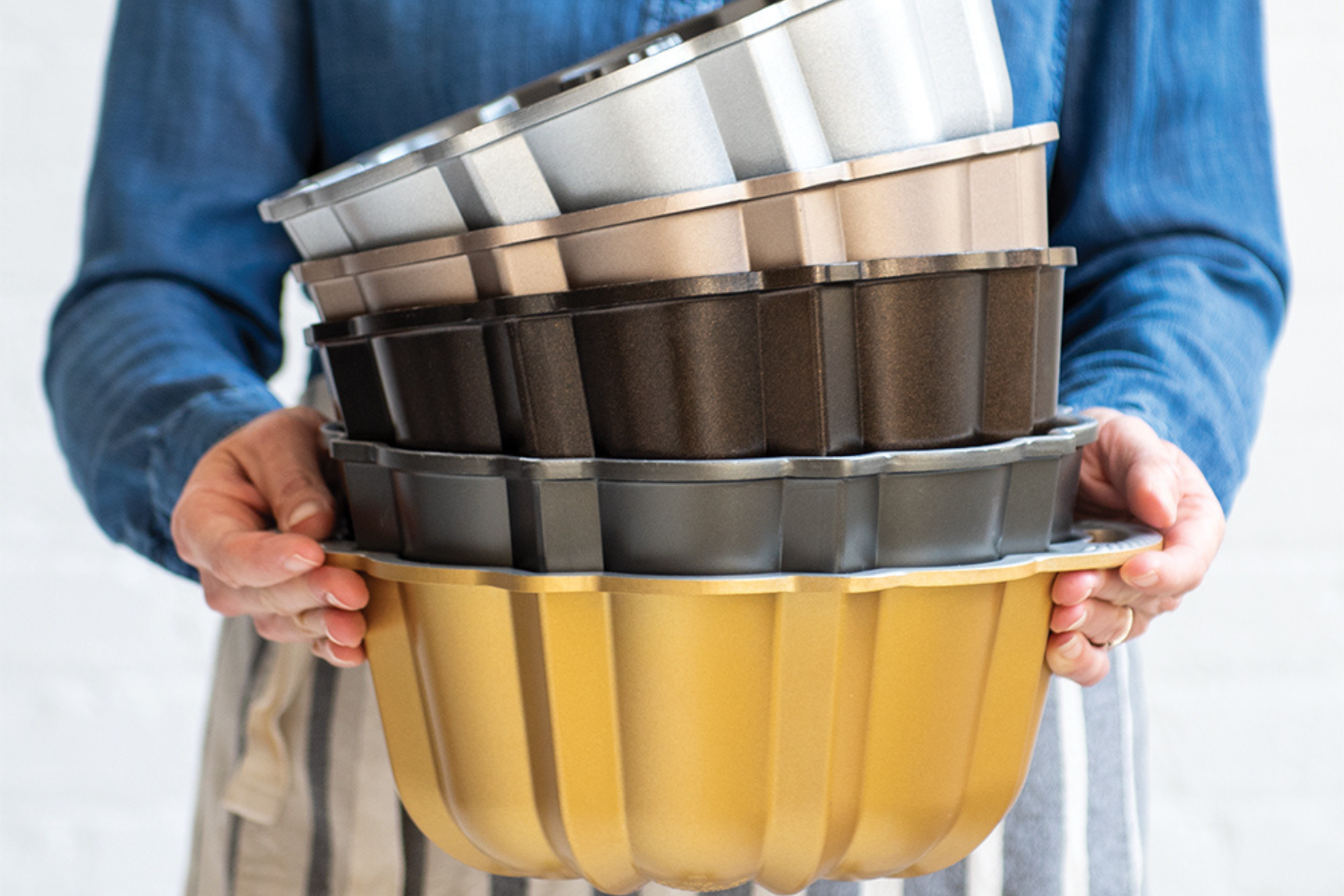
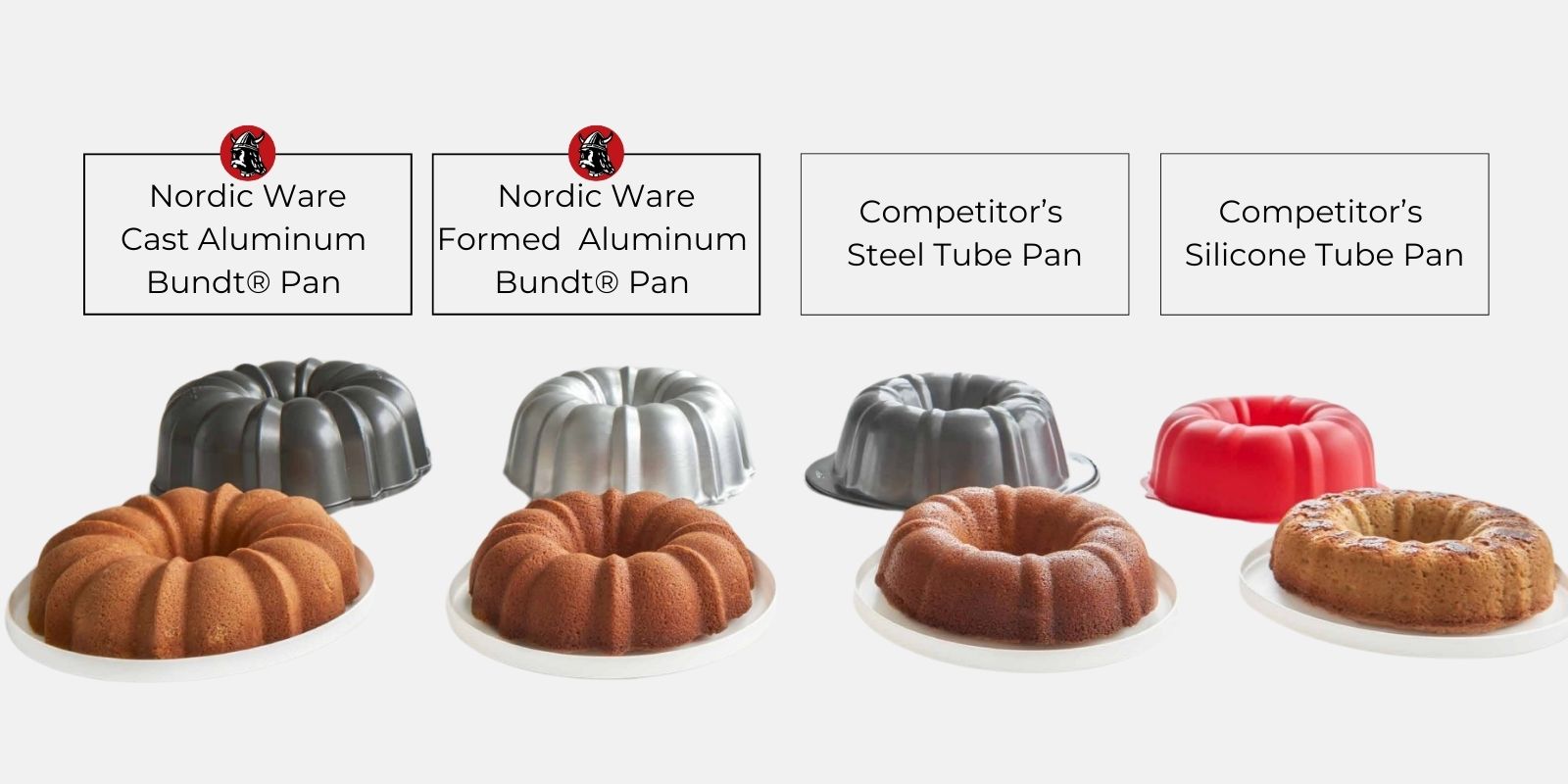
Not all Bundt® pans bake the same way. The material you choose directly impacts heat conductivity, cake texture and how easily your cake releases after baking.
Aluminum Pans
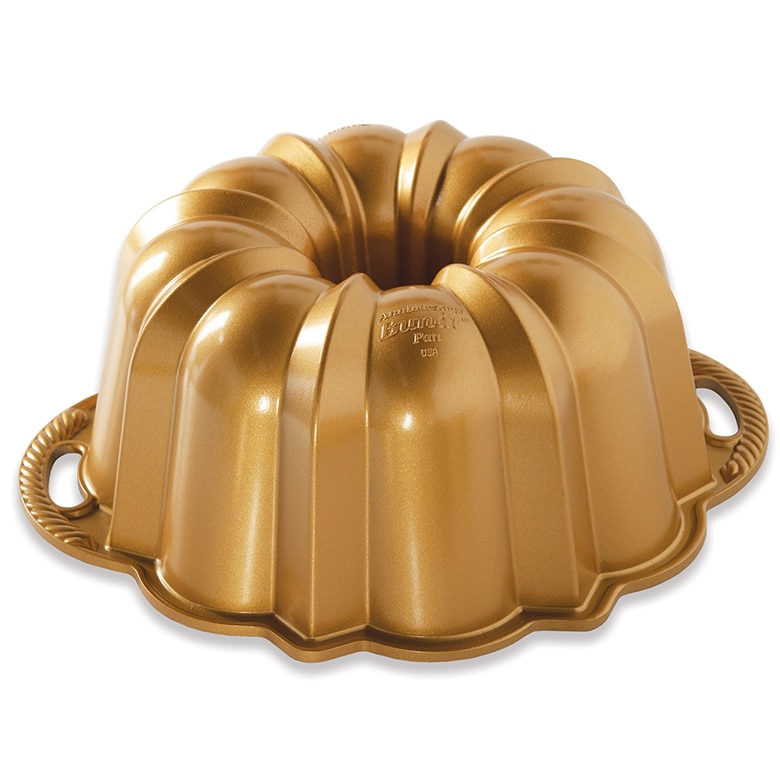
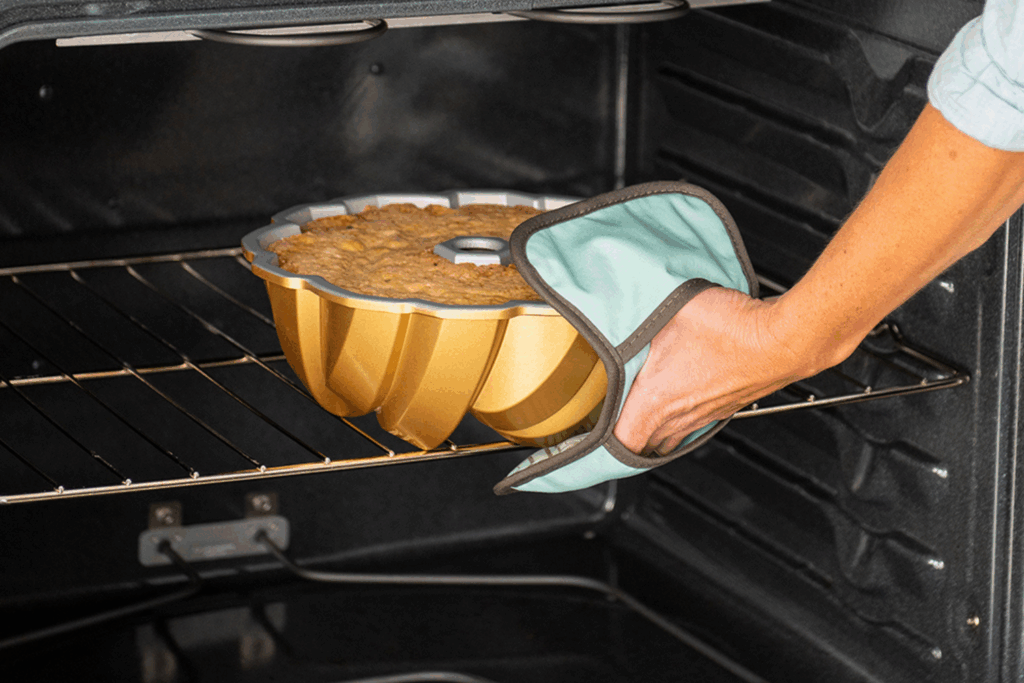
When it comes to baking essentials, cast aluminum is widely considered the best material for Bundt® pans.
Because aluminum is an excellent heat conductor, it distributes heat evenly throughout the pan, reducing hot spots that can cause uneven baking. Cakes bake with consistent color and a tender crumb from edge to center.
The tradeoff? Aluminum pans need to be properly greased before baking. Cast aluminum won’t naturally release baked goods, so it is important to properly prep the pan before baking.
Fortunately, a simple layer of butter or baking spray followed by a light dusting of flour is usually all that’s needed.
Tips for baking with aluminum
- Thoroughly grease every crevice.
- Use baking spray with flour for intricate molds.
- Allow the cake to cool about 10 minutes before inverting.
Non-stick Pans
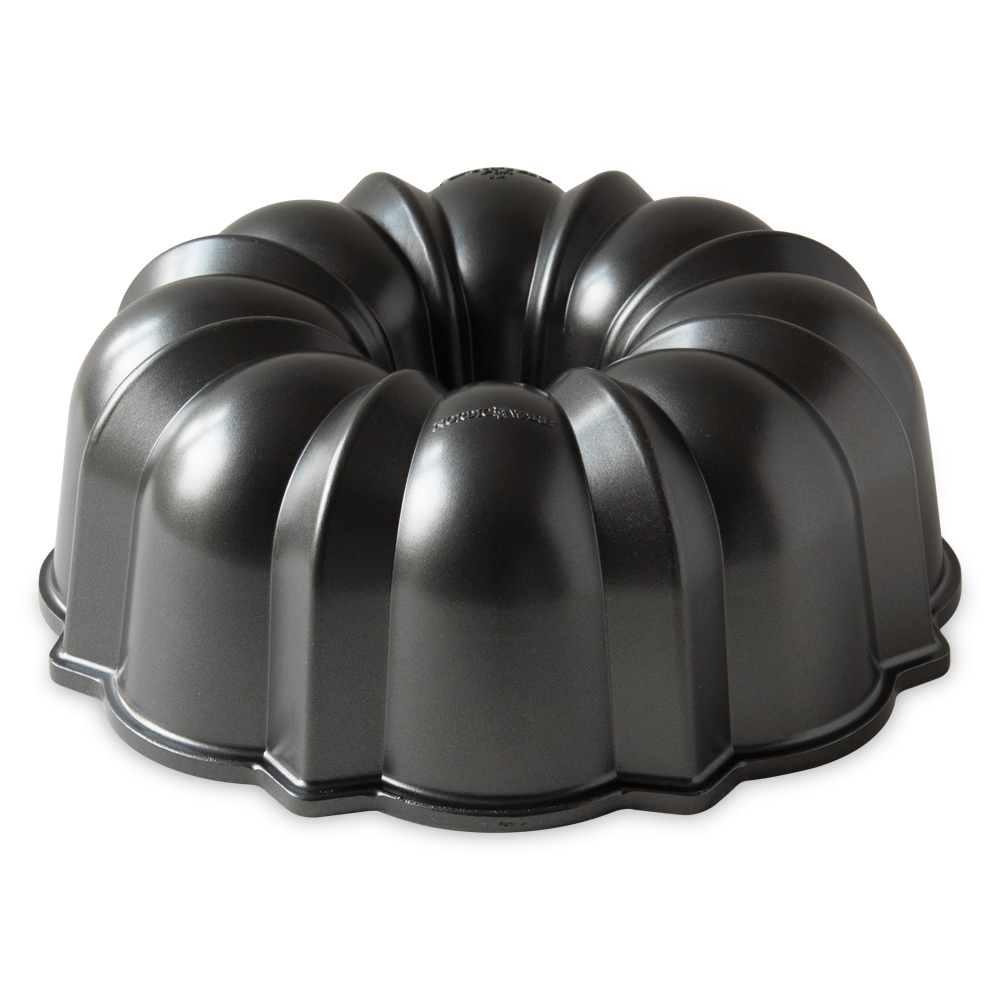
Non-stick coatings make cake release easier, making them popular with beginner bakers. The slick coating helps delicate cakes release with less effort while also simplifying cleanup. Even with a non-stick surface, lightly greasing the pan remains one of the best ways to ensure a clean release. To maximize the lifespan of a non-stick Bundt® pan:
- Avoid metal utensils.
- Wash with a soft sponge.
- Don’t use abrasive cleaners.
- Replace the pan if the coating becomes scratched or begins to peel.
Nordic Ware’s Bundt® pans are crafted from cast aluminum for exceptional heat distribution and detailed cake definition, then finished with a premium nonstick coating to help cakes release more easily and make cleanup simpler. For beginner bakers, that combination offers the best of both worlds: the baking performance of cast aluminum with the convenience of a nonstick surface.
Choosing the Right Size and Design for Beginners
When shopping for the best Bundt® pan for beginners, don’t just focus on appearance. Size and design have a major impact on baking success.
Pan Size
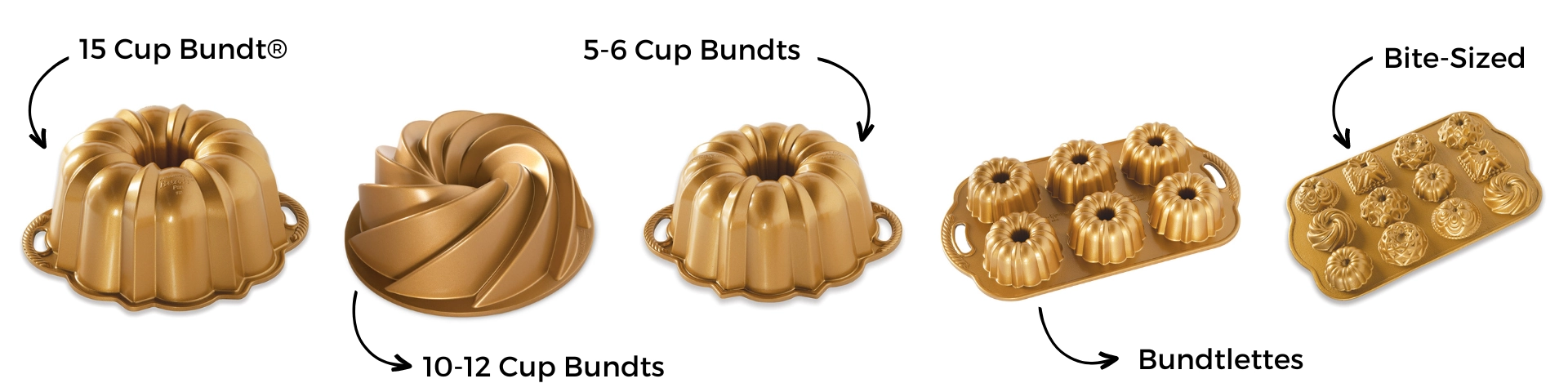
Most Bundt® recipes are written for a 10- to 12-cup pan, making this the ideal starting point. Using a pan that’s too small can cause batter to overflow, while an oversized pan may produce a flatter cake that bakes more quickly. If kitchen storage is limited, one standard-size Bundt® pan is often all you need to bake dozens of recipes.
Design Simplicity
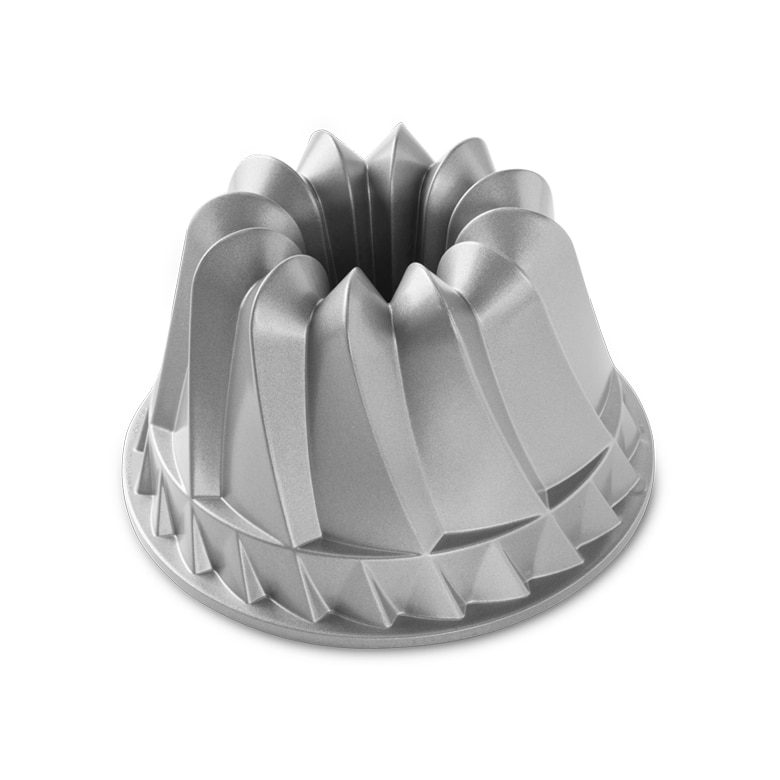
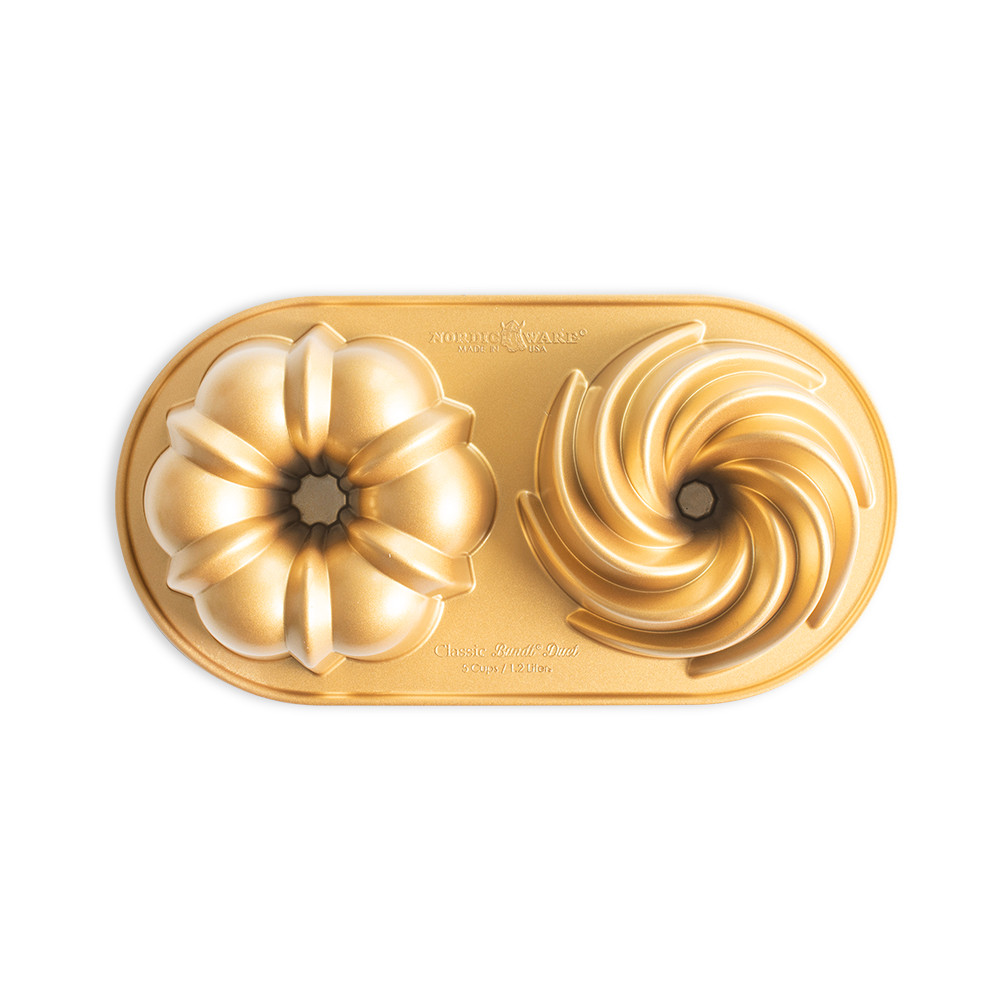
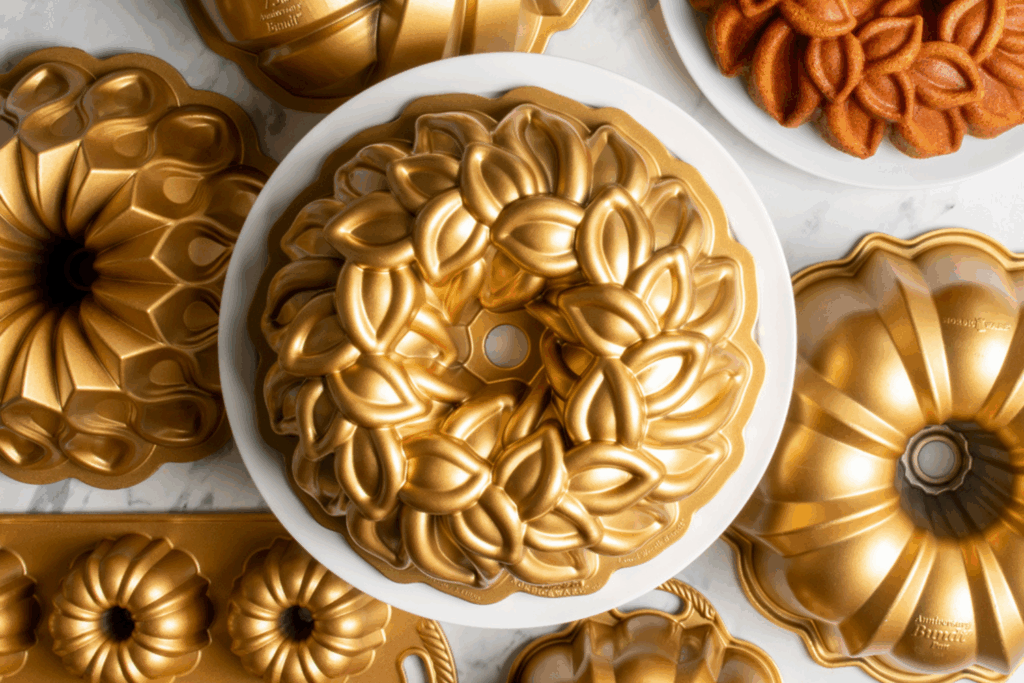
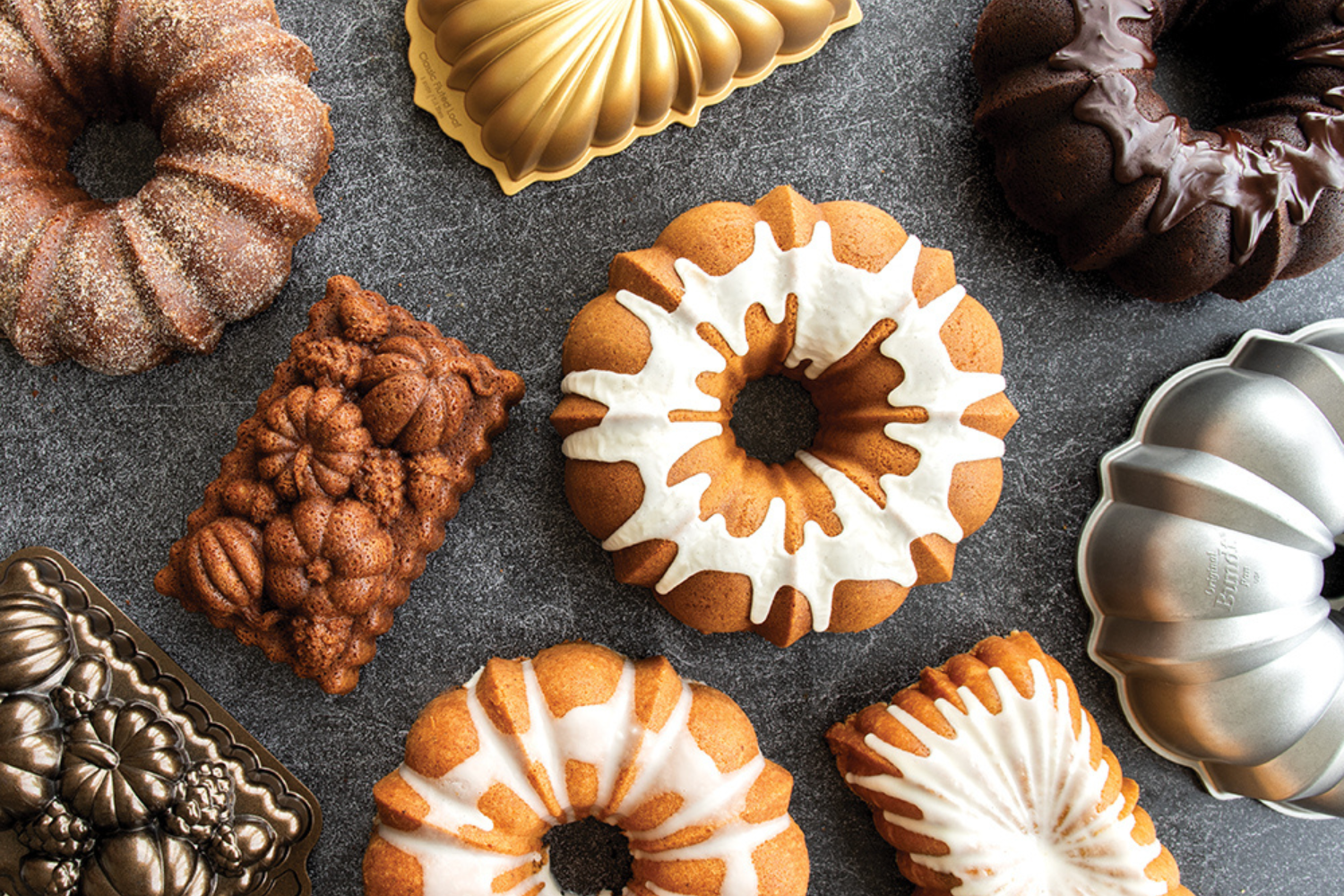
Intricate floral patterns and ornate molds are beautiful, but they also have more small crevices where batter can stick.
For beginners, simple Bundt® designs with classic fluting offer the perfect balance of elegance and reliability.
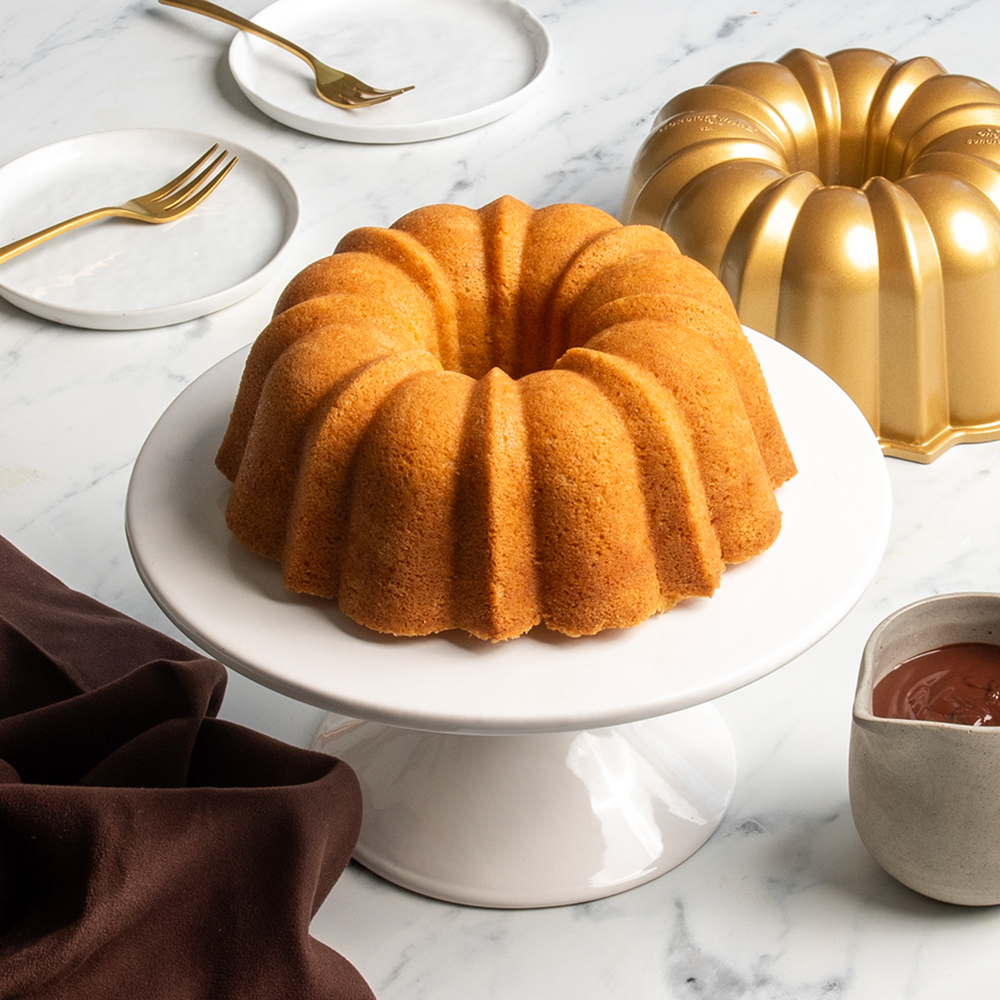
The iconic Original Bundt® Pan remains popular because its deep flutes create dramatic presentation while still allowing cakes to release easily with proper preparation.
Once you’re comfortable with Bundt® baking, decorative seasonal designs can add even more personality to your desserts.
Which Bundt® Pan is Easiest to Clean?
One of the biggest concerns for new bakers is cleanup. Fortunately, maintaining quality bakeware isn’t difficult. However, care and maintenance is different depending on the product you choose.
Non-stick Care
Proper care can extend the life of a non-stick pan for years. To preserve the coating:
- Hand wash whenever possible.
- Avoid dishwasher detergents that can wear down finishes.
- Never stack heavy cookware directly inside the pan.
Aluminum Maintenance
While aluminum doesn’t rust like steel, minerals from hard water can sometimes leave discoloration. This is cosmetic and doesn’t affect baking performance. Cast aluminum keeps exceptional baking performance over time when cared for correctly. After baking:
- Wash using warm water and mild soap.
- Dry immediately.
- Avoid soaking for extended periods.
- Store completely dry.
Learn more Bundt® Cleaning Tips:
How Bundt® Pan Design Affects Cake Appearance
One of the biggest reasons Bundt® cakes remain so popular is that they look impressive with very little decorating. The pan itself creates the finished presentation, turning even a simple vanilla or chocolate cake into a centerpiece.
But a Bundt® pan’s design does more than create eye-catching swirls and ridges. The depth and intricacy of the pattern can also affect how batter bakes and how easily the cake releases from the pan. Simpler designs with wider grooves are often more forgiving for beginner bakers because they’re easier to grease thoroughly and less likely to trap delicate pieces of cake. More elaborate pans produce stunning, bakery-worthy results, but they typically require extra attention when preparing the pan to ensure every detail releases cleanly.
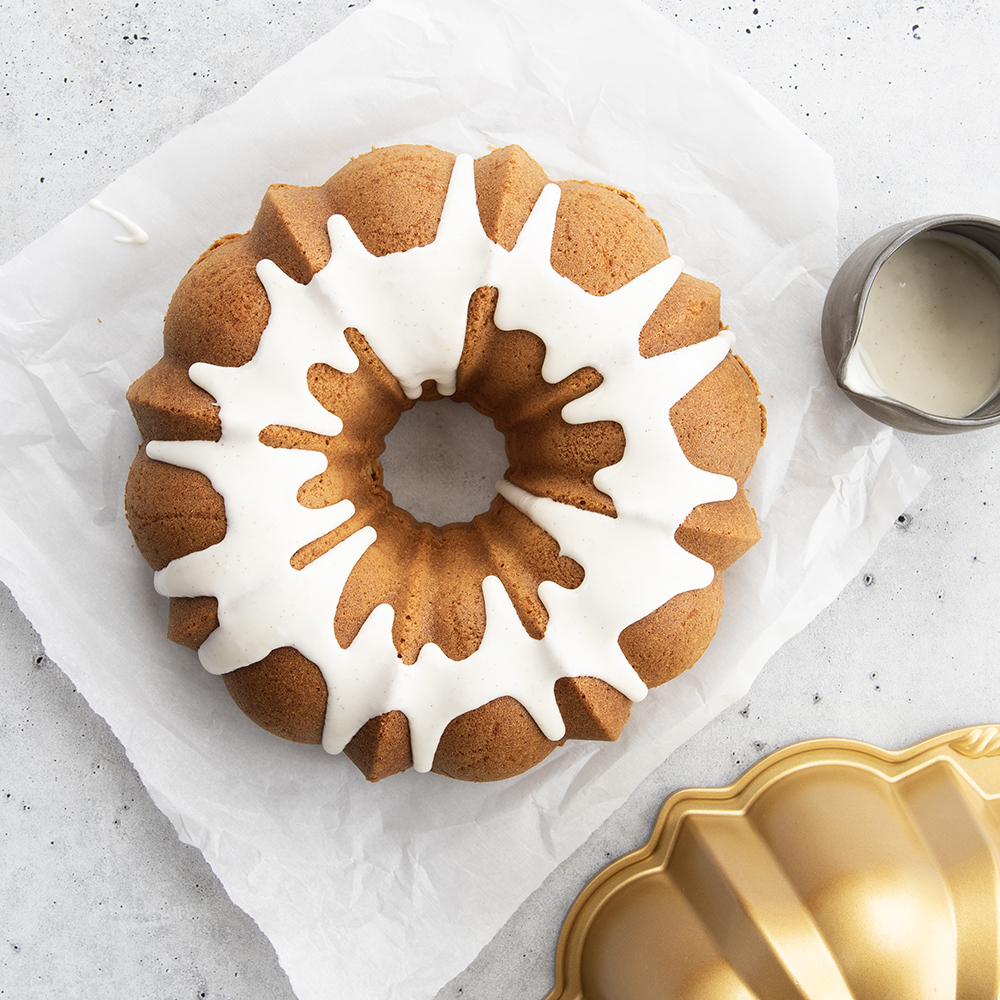
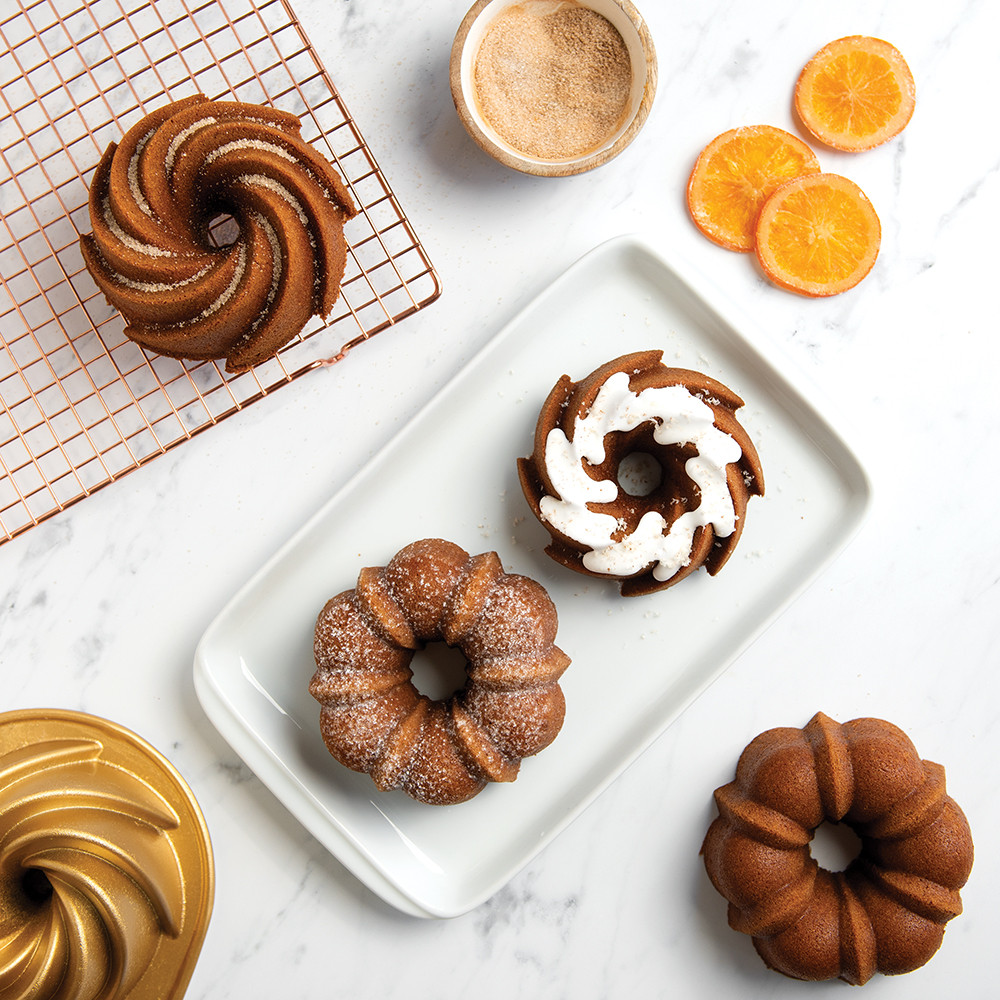
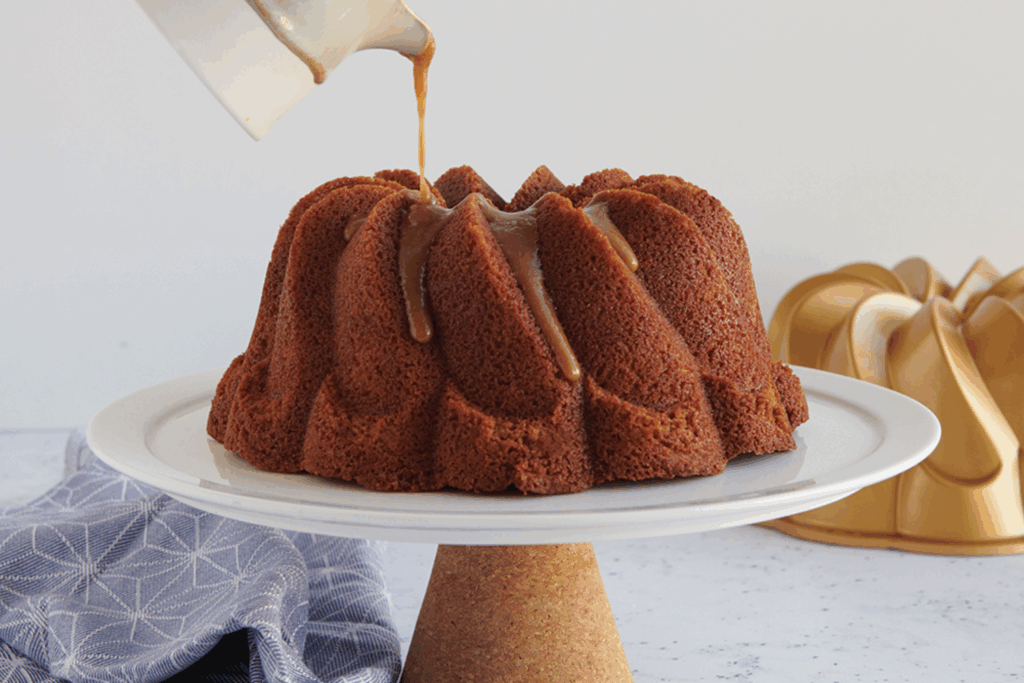
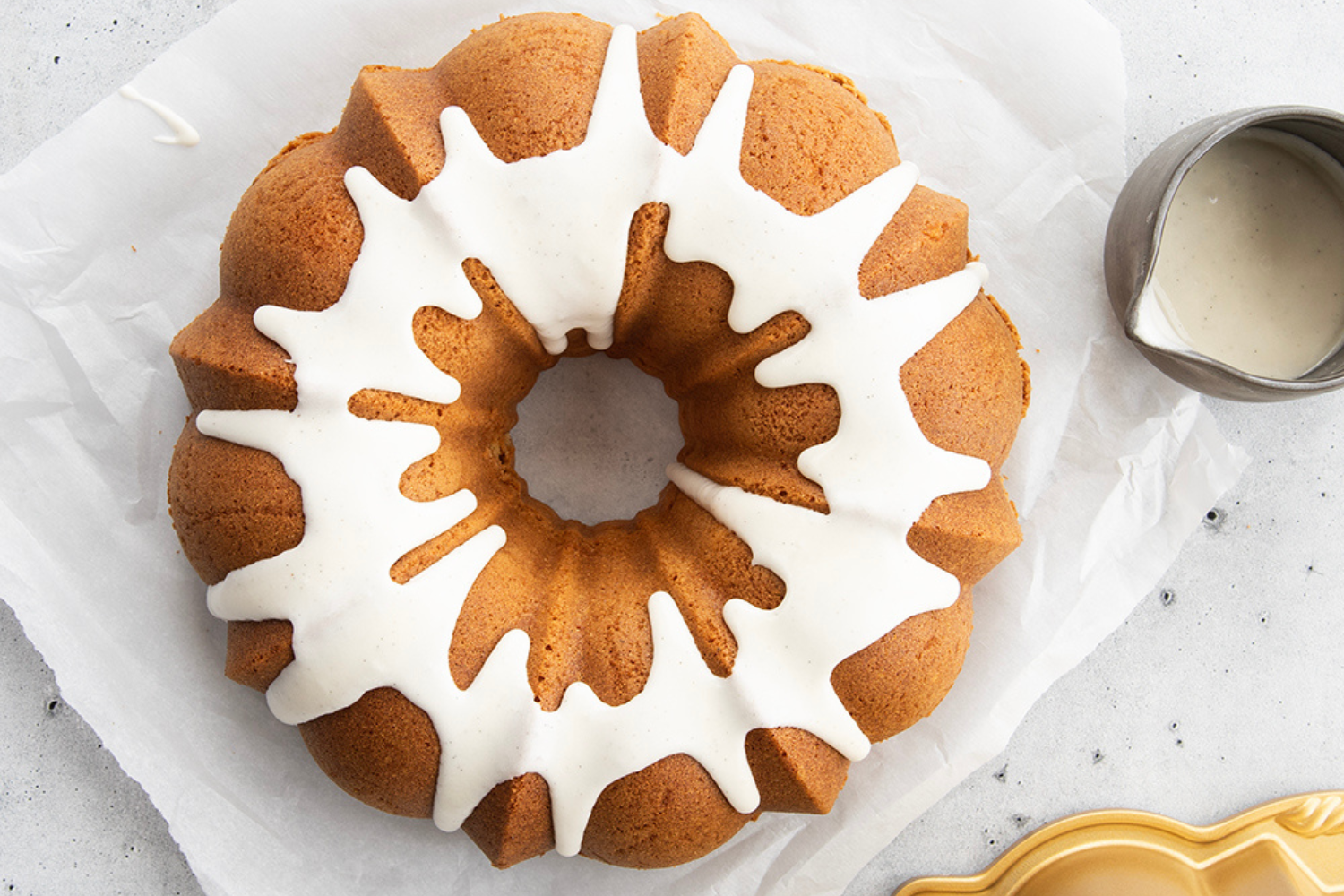
The design also determines how you’ll finish the cake. Intricate patterns often need nothing more than a light dusting of powdered sugar to highlight every curve and ridge, while classic fluted Bundt® cakes provide the perfect canvas for a rich glaze, ganache or drizzle that naturally cascades down the sides.
Pro Tip: The more intricate the Bundt® pan, the more important proper pan preparation becomes. Thoroughly greasing every nook and cranny and lightly dusting with flour if your recipe calls for it helps preserve every beautiful detail when it’s time to unmold your cake.
Fluted vs. Plain
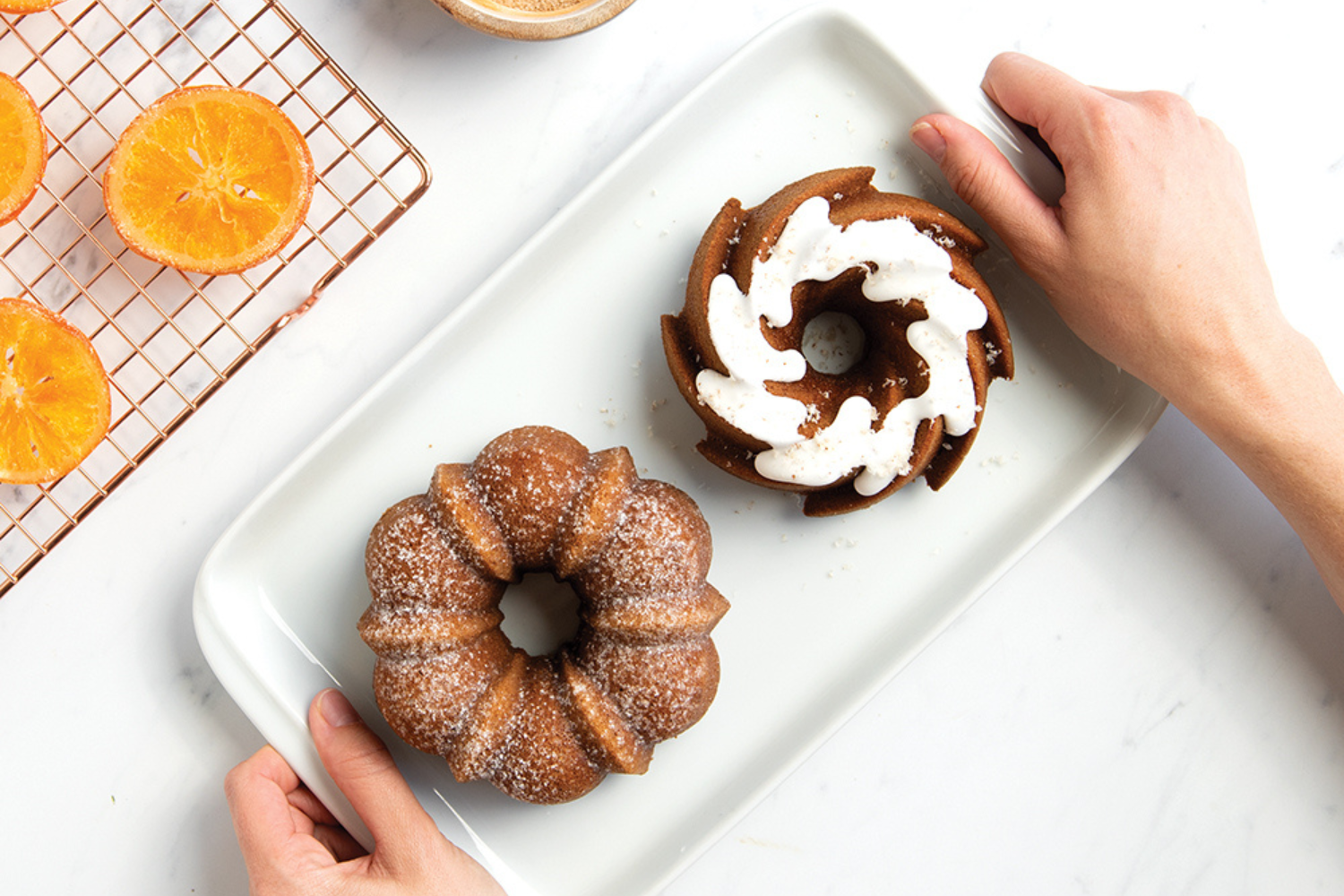
Classic fluted pans create striking ridges that beautifully catch glazes, powdered sugar and chocolate drizzle. Smooth-sided pans produce a more understated cake that’s easier to frost or decorate. Both styles bake well, so the choice depends largely on presentation.
Design and Heat Distribution
Every ridge and curve changes how the batter bakes. Quality Bundt® pans are engineered so batter cooks evenly despite decorative shapes. Well-designed cast aluminum pans help maintain consistent heat throughout the cake, reducing dense centers or overbaked edges.
Frequently Asked Questions by Beginners
Why Did My Cake Stick?
The most common reasons include:
- Not greasing thoroughly.
- Removing the cake too early.
- Waiting too long before unmolding.
- Using a worn non-stick coating.
Material Choice FAQs
For most bakers, cast aluminum offers the best heat distribution; non-stick provides easy release and silicone offers convenience but slightly less even baking.
Tips for Perfect Bundt® Cake Baking
Greasing Techniques
Success starts before the batter enters the oven. The first step is to grease every surface. If you have an intricate pan, use a pastry brush to coat every curve and corner. Even the best non-stick Bundt® pans benefit from light greasing. For more detailed preparation tips, including how much baking spray to use and common mistakes to avoid, check out How to Make a Bundt® Cake: Foolproof Tips for Prep, Baking & Release.
Cooling Advice
Allow the cake to cool for about 10 minutes before turning it onto a cooling rack. Too soon, and it may collapse. Too late, and it may stick. Finding that sweet spot is one of the easiest ways to improve your results. If you’re struggling with release or want more troubleshooting tips, our guide to prep, baking, and release walks through the entire process step by step.
Conclusion
Bundt® cakes may look sophisticated, but they’re one of the most rewarding desserts for beginning bakers. Choosing quality bakeware, understanding how different materials perform and learning proper preparation techniques will dramatically improve your results.
A well-made cast aluminum Bundt® pan offers exceptional heat conductivity, beautiful cake definition and years of reliable performance. Pair that with careful greasing, proper cooling and thoughtful maintenance, and you’ll enjoy bakery-worthy cakes from your very first bake.
Whether you’re baking a classic vanilla Bundt®, rich chocolate cake or seasonal pumpkin spice recipe, investing in the right pan helps ensure every slice is as beautiful as it is delicious.
FAQ Section
Q: What is the best Bundt® cake pan to use?
A cast aluminum Bundt® pan is often considered the best choice because it provides excellent heat distribution for even baking. Many beginners also appreciate high-quality non-stick finishes for easier cake release. The iconic Nordic Ware Original Bundt® Pan remains a favorite among home bakers and professionals alike.
Q: How to pick a Bundt® pan?
Look for a pan made from quality materials, a standard 10- to 12-cup capacity, a design that’s easy to grease thoroughly and a shape that matches your baking style. Beginners often find classic fluted designs easier to work with than highly intricate molds.
Q: What is the secret to a moist Bundt® cake?
Avoid overmixing the batter, bake only until a toothpick comes out clean and allow the cake to cool for about 10 minutes before removing it from the pan. Using the proper pan also helps ensure even baking and prevents dry edges.
Q: Does the design of a Bundt® pan matter?
Yes. The design affects both the finished appearance and how evenly the cake bakes. Classic fluted pans create elegant ridges while remaining relatively easy to prepare, making them an excellent choice for beginners.
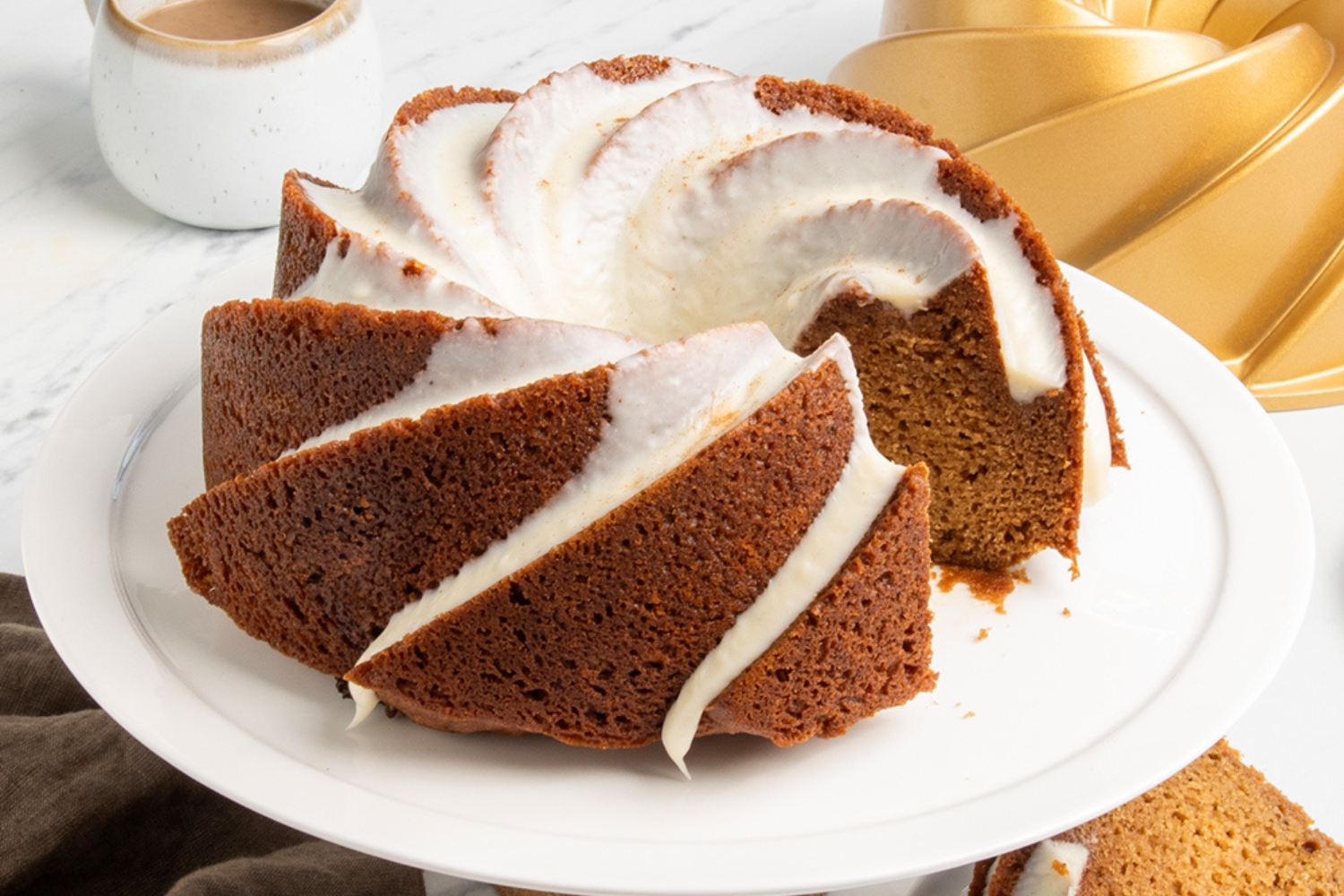
Looking for some beginner friendly Bundt® cake recipes? Here are 10 of our favorites:
-
Vanilla Bundt® Cake with a Vanilla Bean Glaze
-
Almond Bundt® Cake with Raspberry Filling
-
Cinnamon Spice Donut Bundt® Cake
-
Brown Sugar Bundt® Cake with Caramel Glaze
-
Cranberry White Chocolate Bundt® Cake
-
Chocolate Cherry Bundt® Cake
-
Vanilla Celebrations Bundt® with Confetti Glaze
-
Double Chocolate Zucchini Bundt® Cake
-
Lemon Thyme Olive Oil Bundt® Cake
-
Pumpkin Spice Chocolate Marble Bundt® Cake