How to Can Food at Home: A Beginner’s Guide to Water Bath Canning with a Stock Pot
There’s something incredibly satisfying about opening a jar of homemade strawberry jam in the middle of winter or serving pickles you preserved from a summer garden harvest. Canning allows you to capture the flavors of the season and enjoy them long after peak produce has disappeared from store shelves. It’s a practical way to reduce food waste, stock your pantry with homemade favorites, and create thoughtful gifts for friends and family.
If you’ve ever been curious about home food preservation but felt intimidated by the equipment, you’re not alone. Many first-time canners assume they need specialized tools and a dedicated canner to get started. The good news is that many popular foods, including jams, jellies, pickles, and applesauce, can be safely preserved using a simple water bath canning method and a quality stock pot you may already own.
Whether you’re looking to save money, preserve a bumper crop of fruits and vegetables, or simply try a rewarding new kitchen hobby, this beginner canning guide will walk you through the basics of how to can food at home.
Table of Contents:
- What Is Canning?
- What Is Water Bath Canning?
- What Foods Can You Safely Water Bath Can?
- Canning for Beginners: What Supplies Do You Need?
- Can You Use a Stock Pot Instead of a Canner?
- Choosing the Best Pot for Canning
- Step-by-Step: How to Water Bath Can Food
- Common Canning Mistakes Beginners Should Avoid
- Why Warm Jars Matter (And Easy Ways to Keep Them Warm)
- Why a Quality Canning Pot Makes Canning Easier
- More Ways to Use Your Stock Pot
- Frequently Asked Questions About Canning
- Get Started Canning with a Stock Pot
What Is Canning?
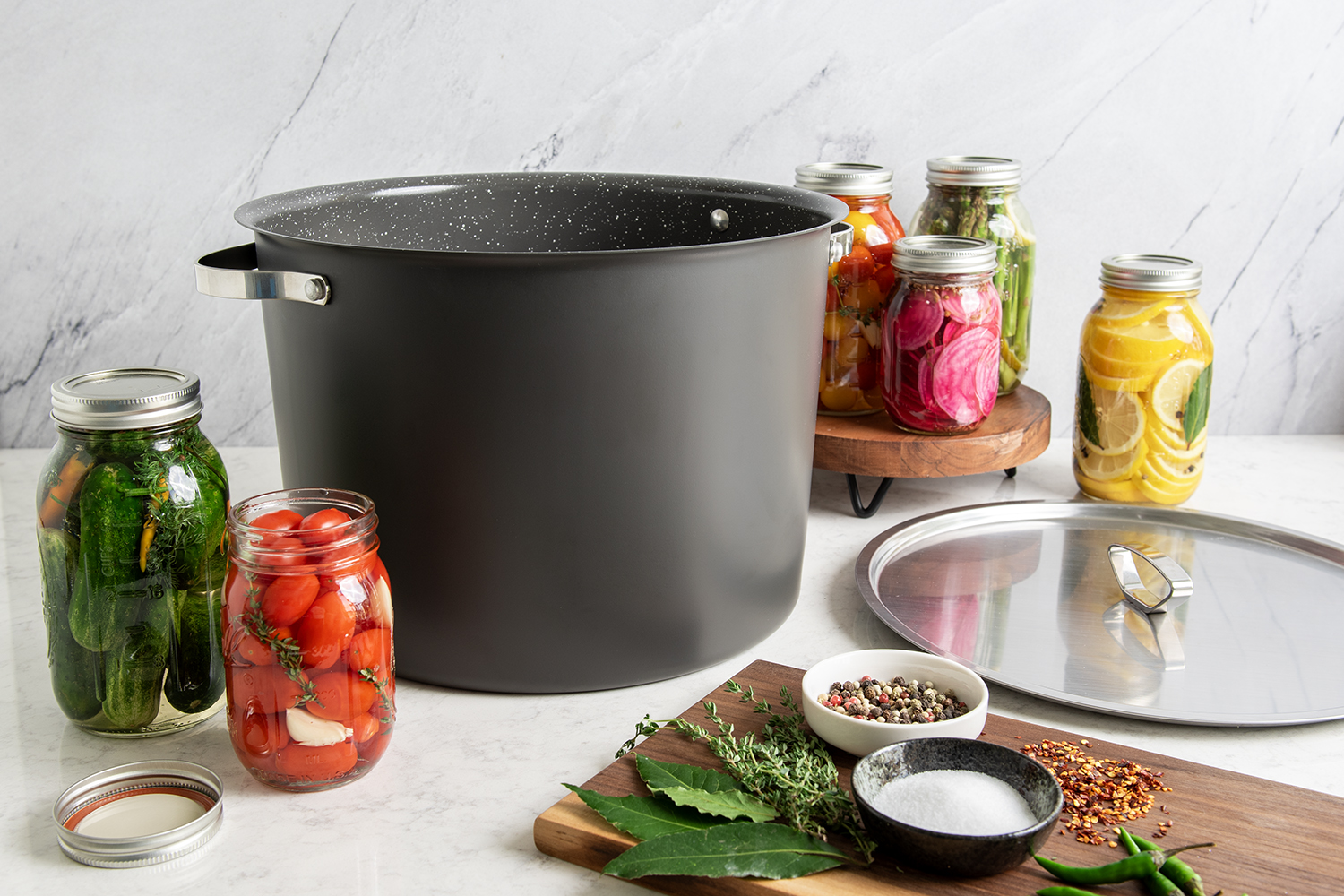
Canning is a method of preserving food by sealing it in jars and processing it with heat to create a shelf-stable product. The process destroys harmful microorganisms and creates an airtight seal that helps foods last for months or even years when stored properly.
People preserve food to enjoy seasonal produce year-round, reduce food waste, save money, and build a pantry stocked with homemade favorites. Home canning is also a rewarding hobby that allows gardeners, farmers market shoppers, and home cooks to preserve fruits, jams, pickles, sauces, and more at their peak freshness.
Benefits of home canning include:
- Preserving seasonal produce
- Reducing food waste
- Saving money on groceries
- Creating homemade pantry staples
- Enjoying a fun and practical kitchen hobby
Many beginners don’t realize that getting started with water bath canning doesn’t necessarily require a dedicated canner. In fact, many people can successfully learn how to can food using a quality stock pot for canning, along with a few essential canning supplies.
Whether you’re interested in learning how to start canning, building your pantry, or exploring food preservation for the first time, this beginner canning guide will walk you through everything you need to know.
What Is Water Bath Canning?
Water bath canning is a food preservation method used for high-acid foods. Filled jars are submerged in boiling water for a specific amount of time to safely preserve the contents and create a vacuum seal.
This method is ideal for beginners because it requires relatively simple equipment and is one of the easiest ways to start preserving food at home.
What Foods Can You Safely Water Bath Can?
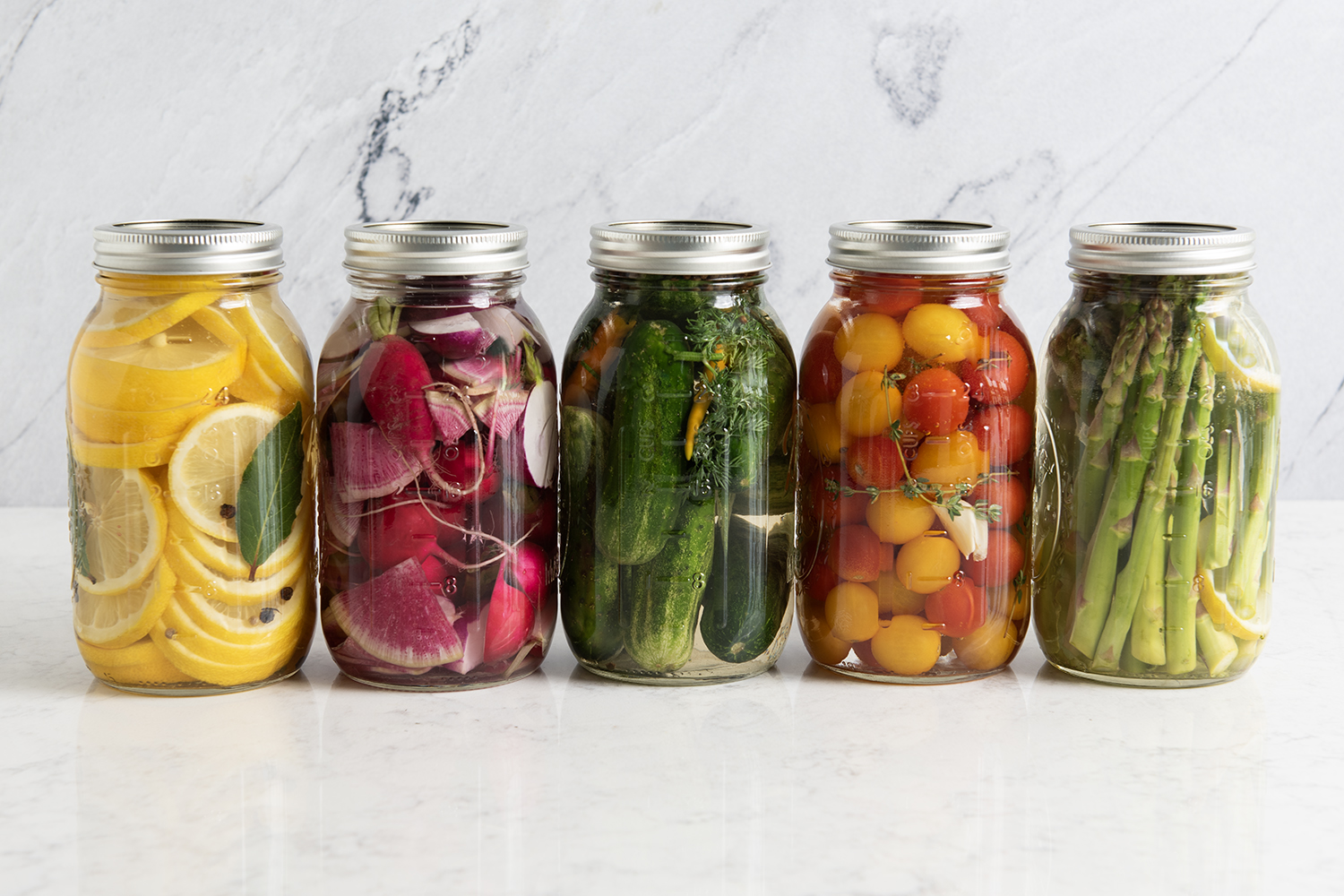
Water bath canning is approved for high-acid foods, including:
- Jam
- Jelly
- Fruit
- Applesauce
- Pickles
- Chutneys
- Acidified tomatoes
- Tested salsa recipes
These foods naturally contain enough acid, or can be safely acidified, making them suitable for boiling-water processing.
Popular Beginner-Friendly Foods to Can
Food |
Difficulty Level |
Good for Beginners |
Strawberry Jam |
Easy |
Yes |
Applesauce |
Easy |
Yes |
Pickles |
Easy |
Yes |
Peach Preserves |
Easy |
Yes |
Tomato Salsa (Tested Recipe) |
Medium |
Yes |
What Foods Require a Pressure Canner Instead?
Low-acid foods require a pressure canner for safe preservation.
These include:
- Meat
- Beans
- Vegetables
- Soup
- Broth
Pressure canning reaches higher temperatures than water bath canning and is required to safely preserve these foods. Always use tested recipes from trusted food preservation sources and follow current food safety recommendations.
Canning for Beginners: What Supplies Do You Need?
Before learning how to water bath can, gather these essential canning supplies and canning equipment:
Item |
Purpose |
Stock Pot |
Holds jars during processing |
Canning Rack |
Keeps jars elevated off bottom |
Mason Jars |
Store preserved food |
Lids & Bands |
Create airtight seal |
Jar Lifter |
Safely move hot jars |
Funnel |
Clean jar filling |
Bubble Remover |
Releases trapped air |
Ladle |
Transfers hot food |
Towels |
Keeps work area clean |
Can You Use a Stock Pot Instead of a Canner?
Yes, for water bath canning.
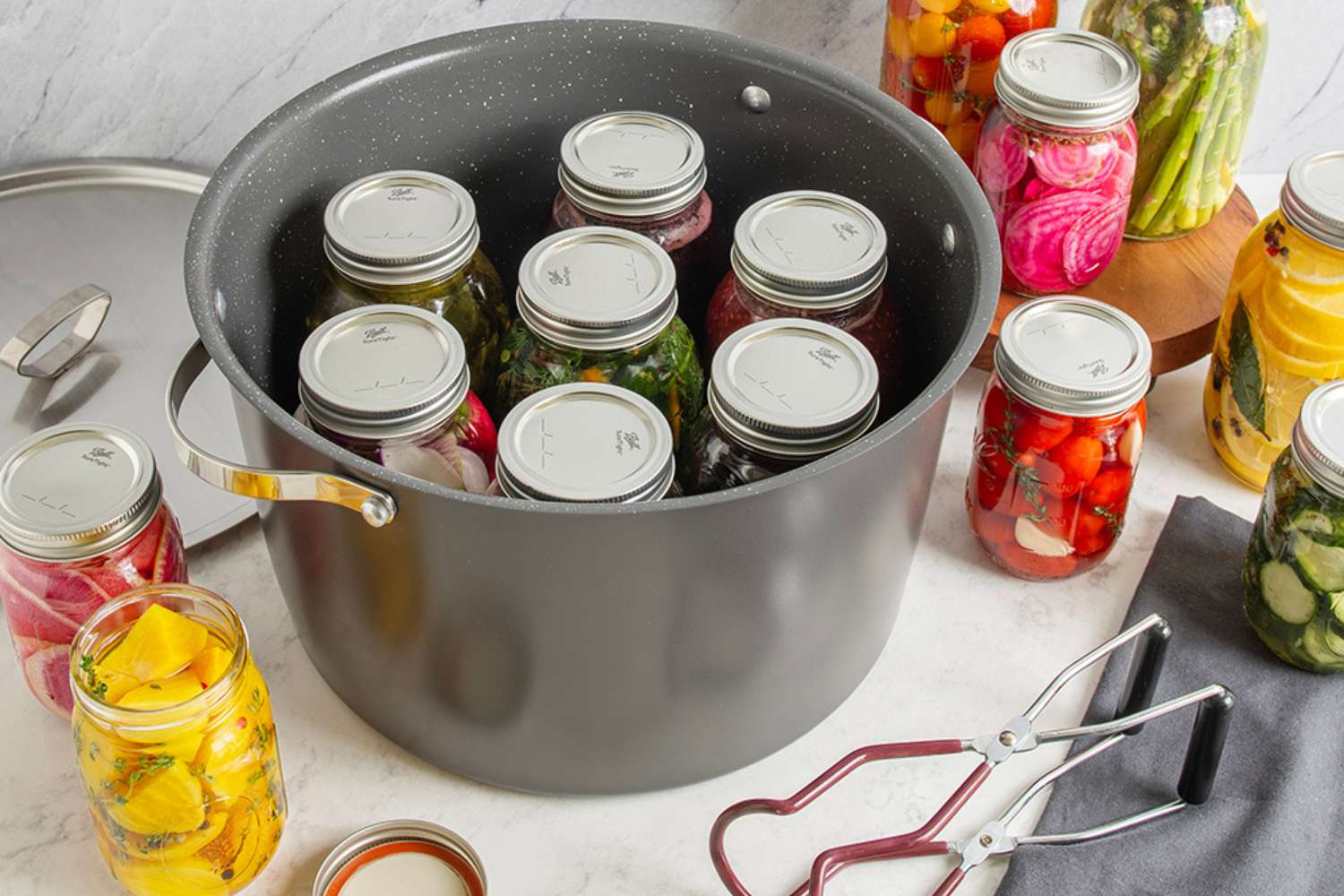
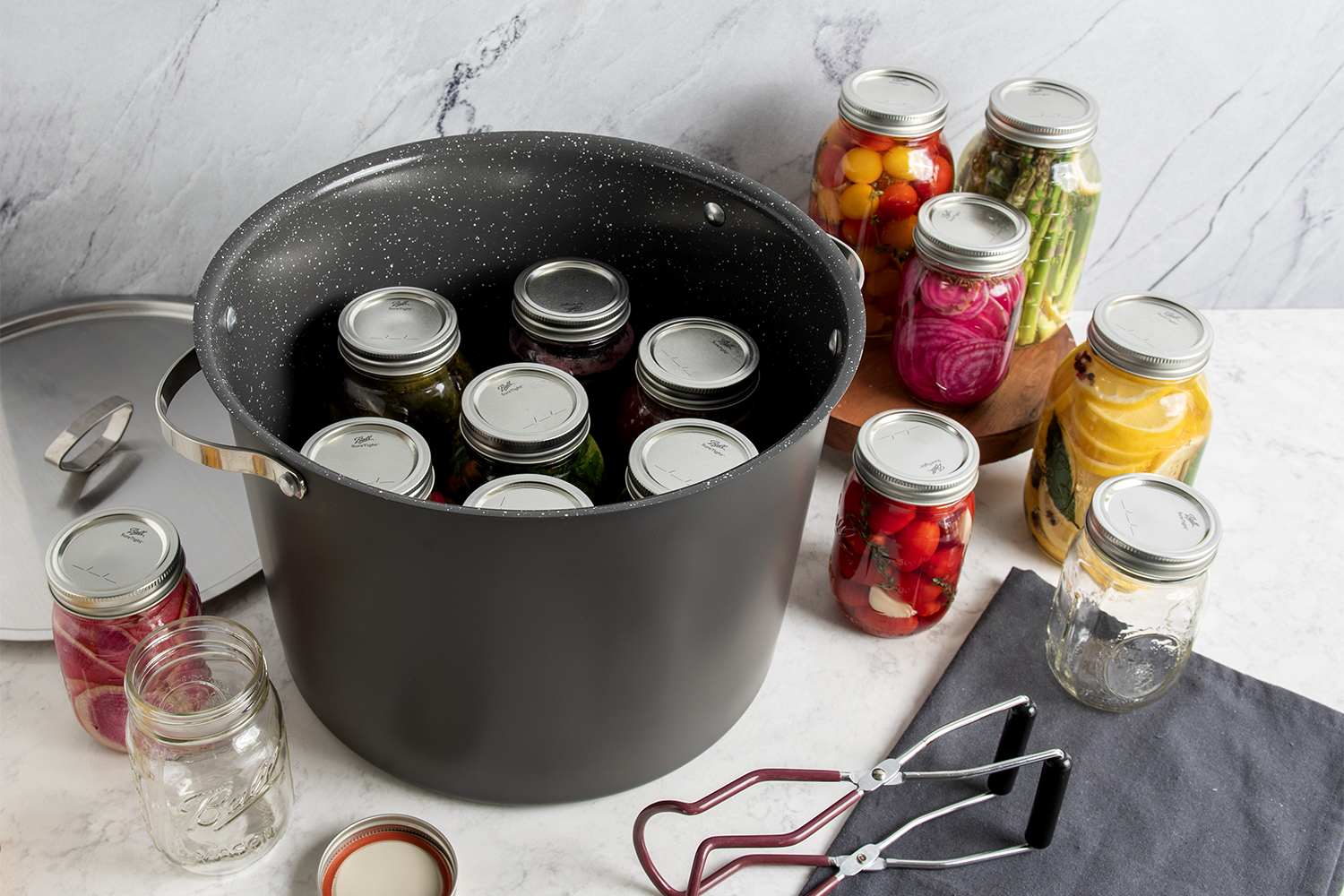
If you’ve searched for the best canning pot or wondered what is a canning pot, the answer may be simpler than you think. A canning pot is simply a large pot used to process jars during water bath canning. While dedicated water bath canners are available, many home cooks can safely use a stock pot for canning as long as it is deep enough to cover jars with 1 to 2 inches of water and includes a canning rack for a pot.
A canning pot with rack or a canning rack for stock pot helps keep jars elevated off the bottom of the pot for proper heat circulation. Whether you call it a water canning pot, canning stock pot, or water bath canning pot, the key is using a pot that is large enough and paired with the appropriate rack.
Choosing the Best Pot for Canning
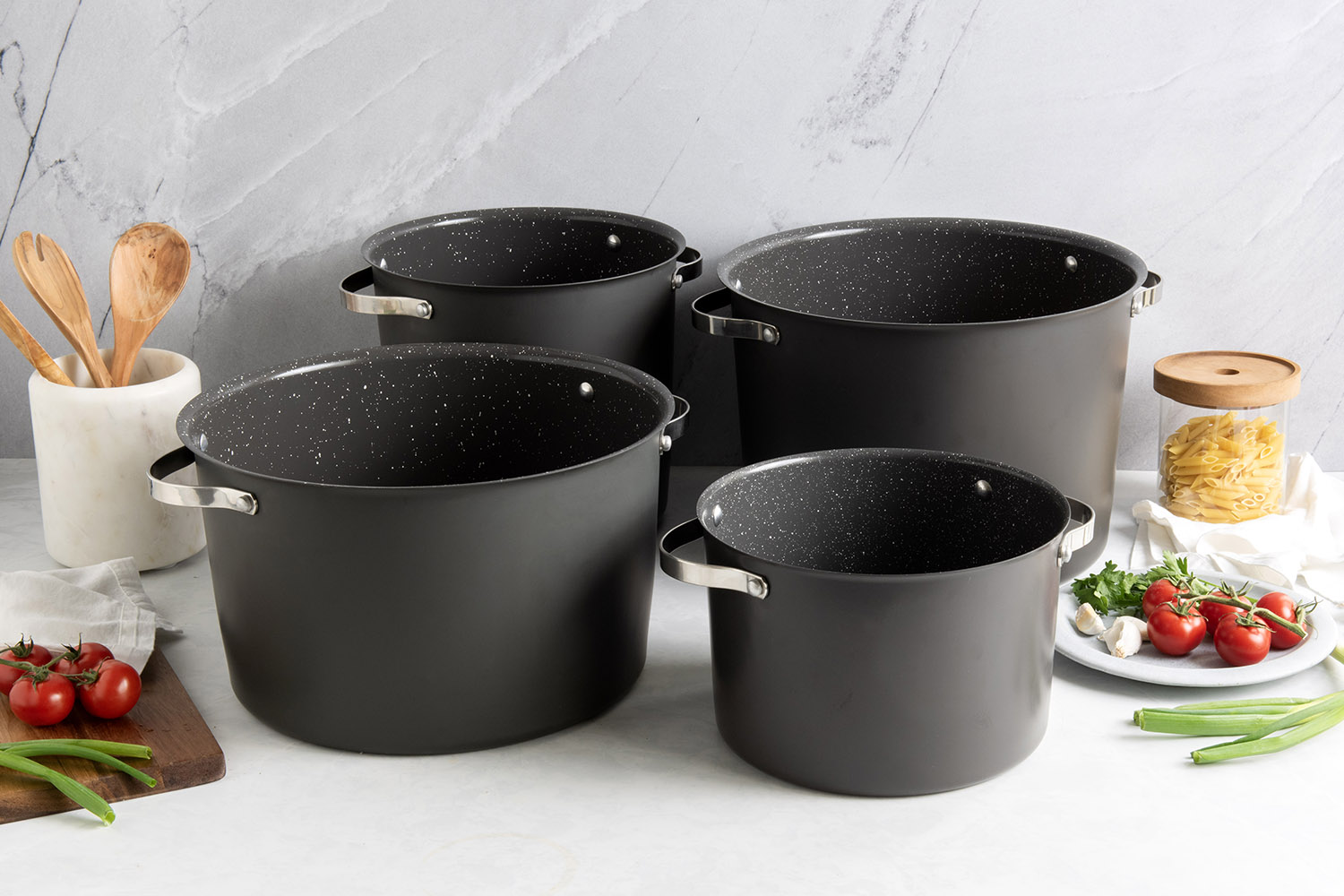
When choosing the best pot for canning, focus on depth, capacity, and durability. The right large pot for canning should comfortably hold your jars, allow proper water coverage, and accommodate a canning pot rack for safe water bath processing.
Pot Size |
Best For |
8 qt |
Small batches, applesauce, sauces |
12 qt |
Jams, jellies, and pickles |
16 qt |
Most beginner canning projects |
20 qt |
Large harvests and batch canning |
For many home canners, a 16- to 20-quart large canning pot provides the versatility needed for both everyday cooking and seasonal food preservation.
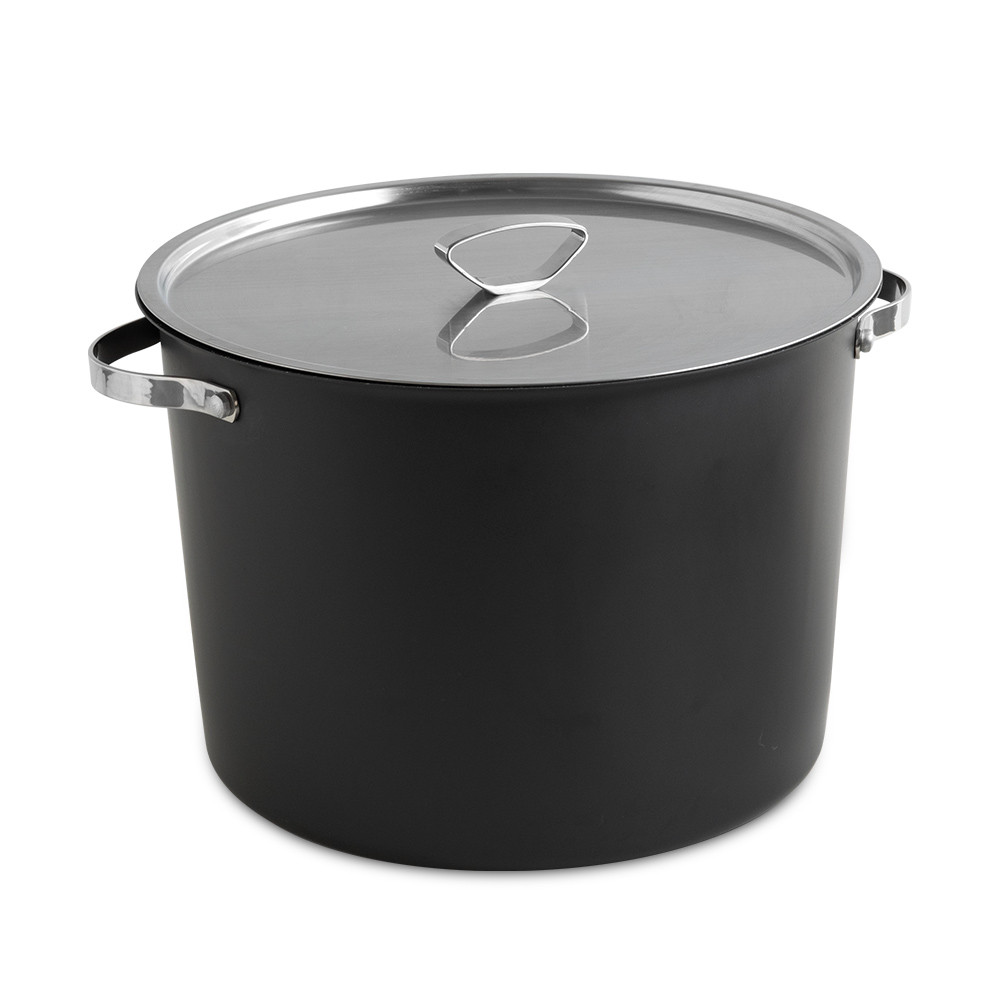
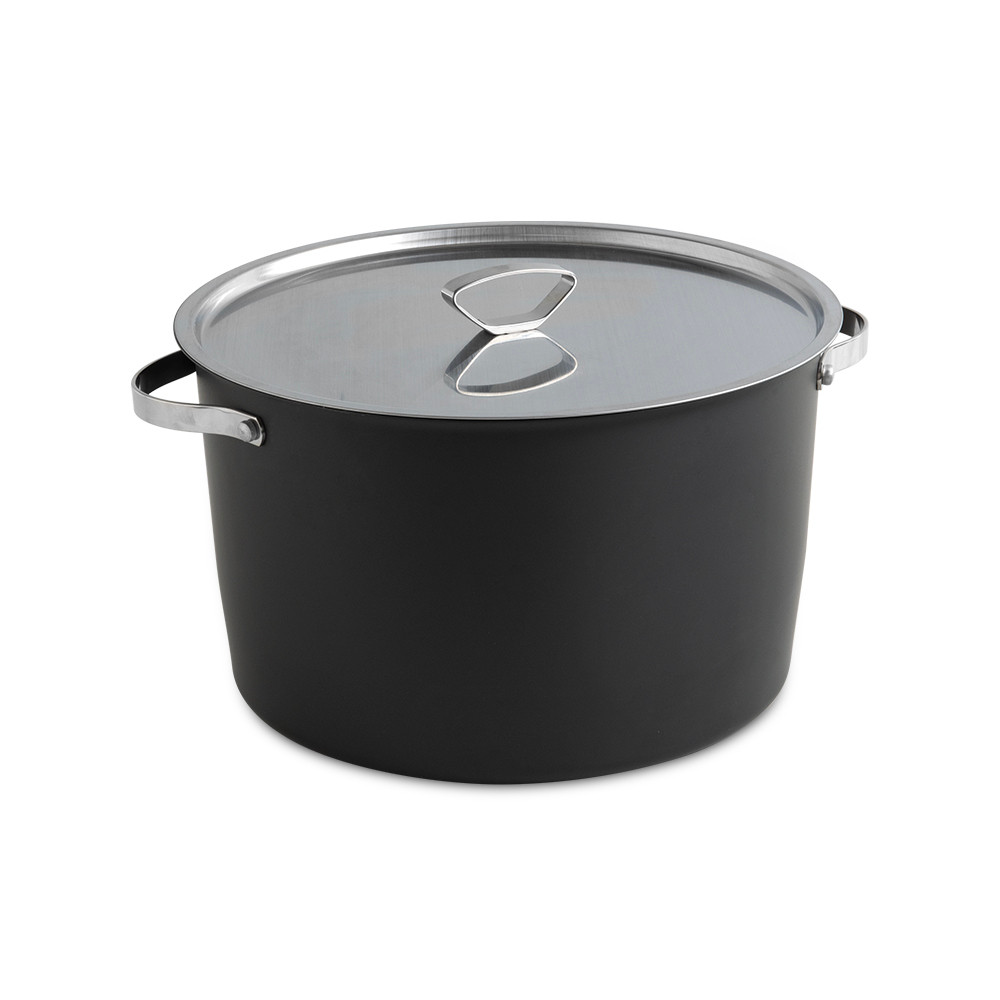
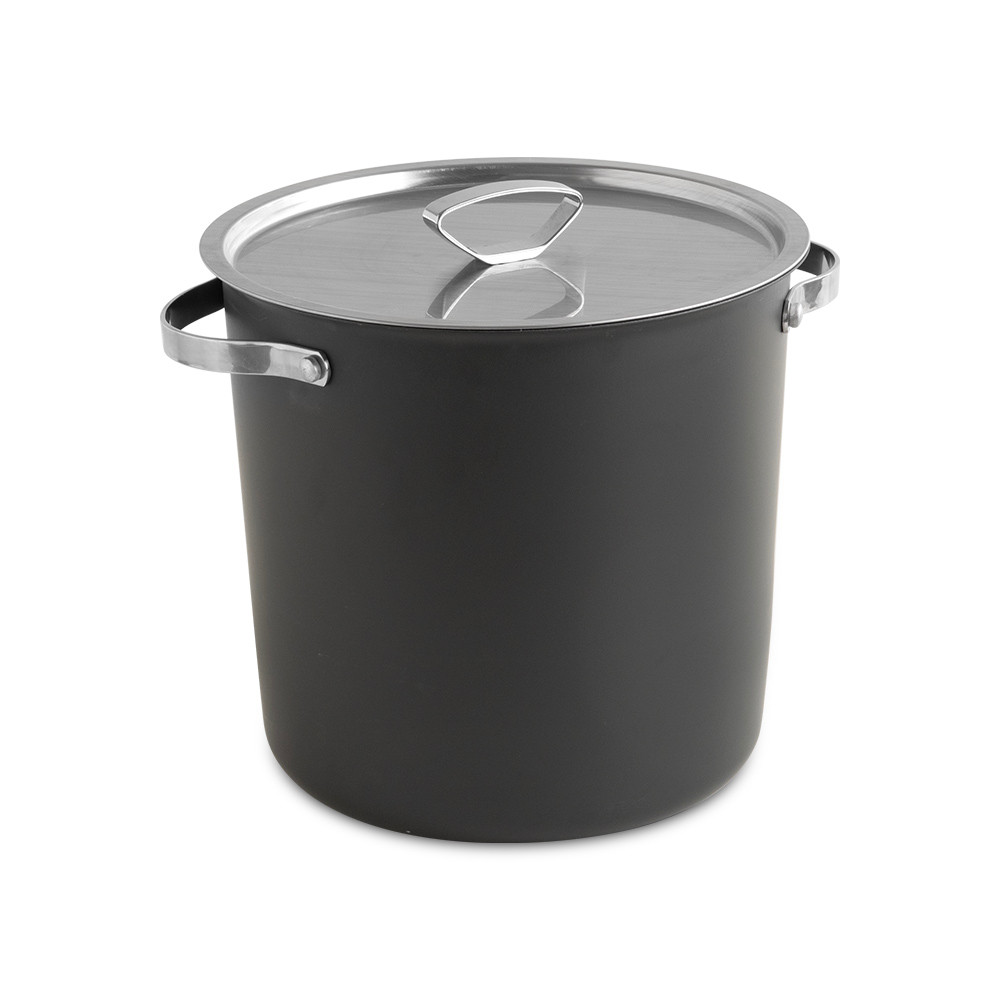
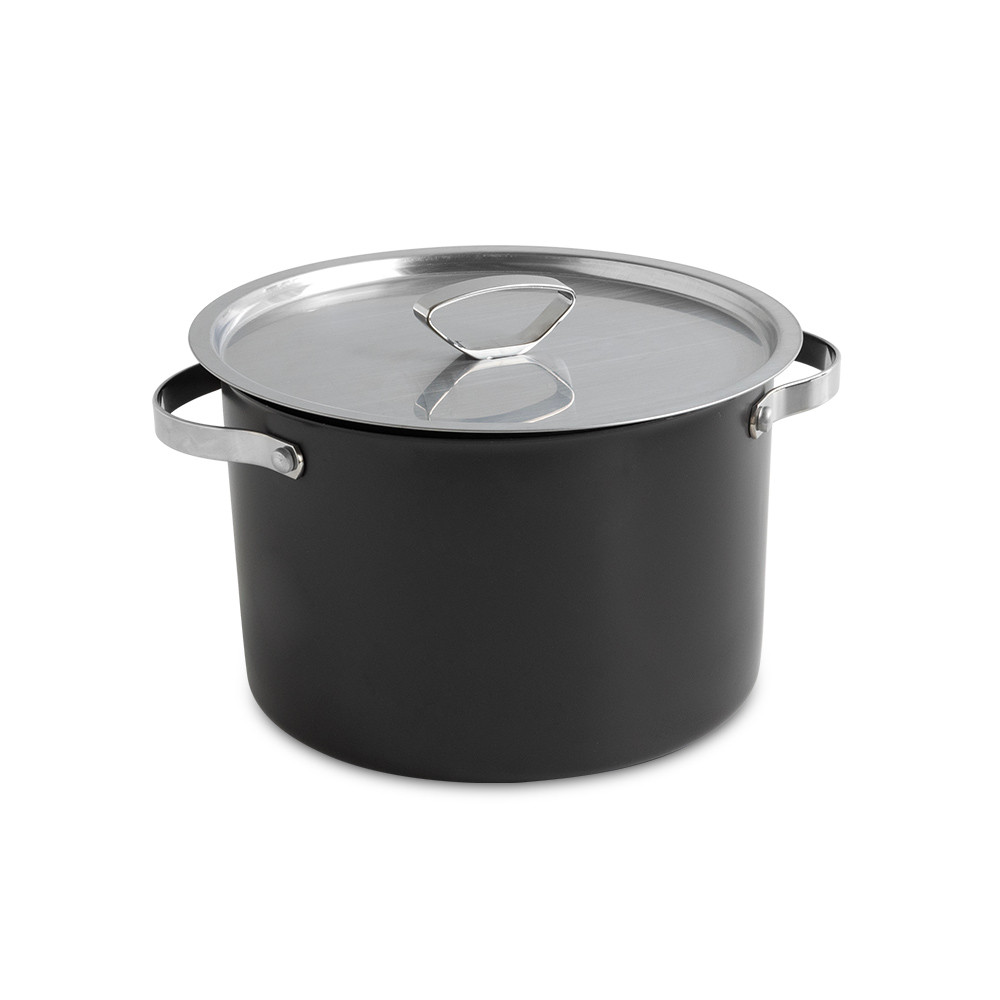
Explore the Nordic Ware Verde Stock Pot Collection for a range of sizes suitable for soups, sauces, and water bath canning.
Step-by-Step: How to Water Bath Can Food
Step 1: Prepare and Warm Your Jars
Wash jars thoroughly and inspect them for chips or cracks. To prevent thermal shock, keep jars warm until you’re ready to fill them. You can do this by running them through a dishwasher cycle or placing them in warm to hot water in the stock pot being used. Warm jars are less likely to crack when filled with hot food.
Step 2: Prepare Your Recipe
While jars heat, follow a tested recipe designed specifically for water bath canning. Heat the recipe as directed before filling jars.
Step 3: Fill Jars
Using a canning funnel, fill warm jars with prepared food, leaving the recommended amount of headspace listed in your recipe.
Step 4: Remove Bubbles
Run a bubble remover or nonmetallic utensil around the inside of each jar to release trapped air pockets. Adjust headspace if needed.
Step 5: Apply Lids
Wipe jar rims clean with a damp cloth. Center the lids on the jars and apply bands according to the manufacturer’s instructions, tightening them until fingertip tight.
Step 6: Place Jars in the Stock Pot
Using a jar lifter, carefully lower filled jars onto a canning rack in your stock pot(if you heated jars in a water bath, keep the water in the pot and place jars back in the warm water). Be sure jars remain upright and do not touch each other.
Step 7: Cover with Water
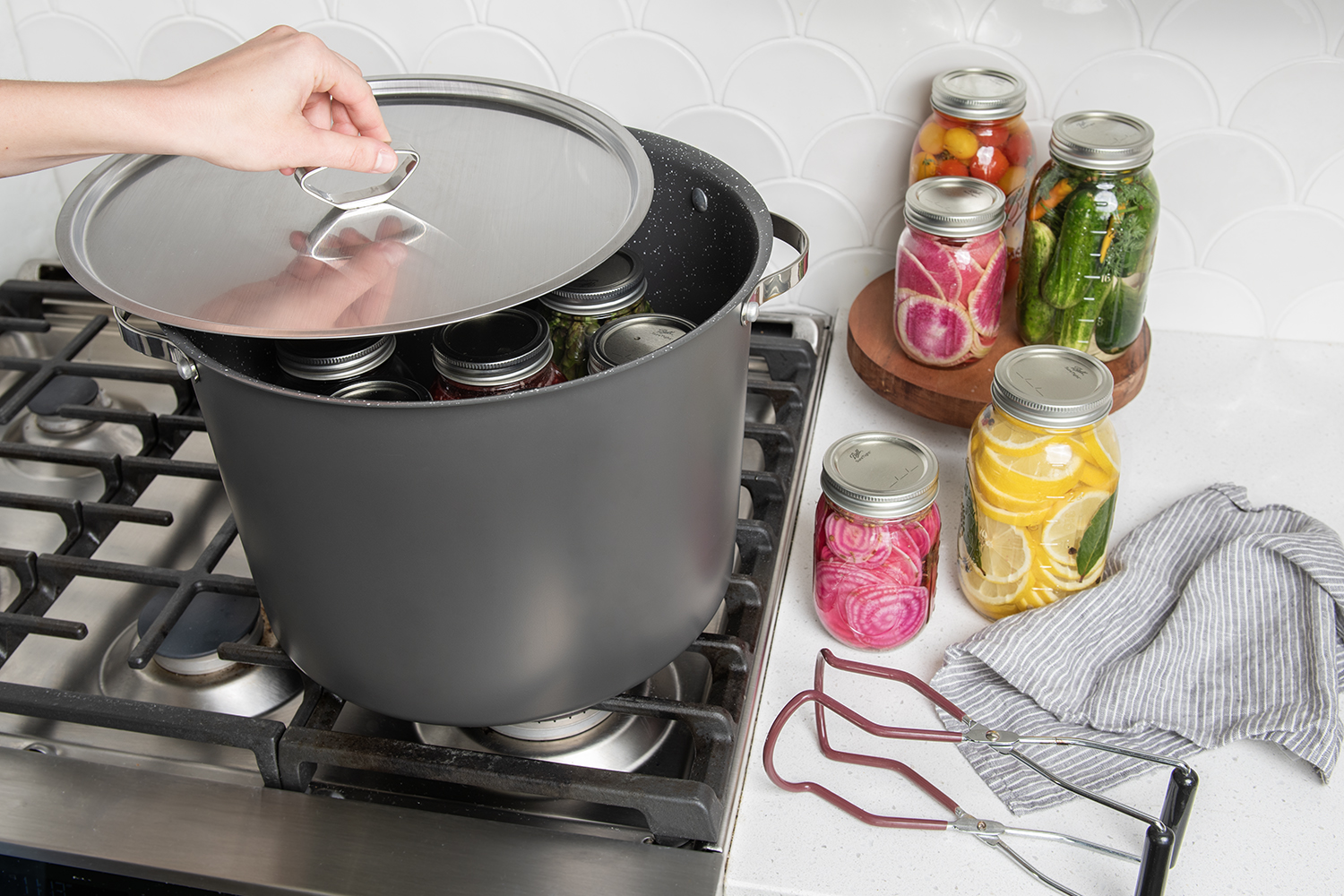
Add more hot water to the pot until the jars are covered by at least 1 to 2 inches of water. Keep the pot covered with a lid to help the water reach a boil more quickly.
Step 8: Bring Water to a Rolling Boil and Process
Heat the pot over high heat and bring the water to a full rolling boil. Once the water reaches a rolling boil, start your processing timer and boil for the amount of time specified in your recipe. Maintain a steady rolling boil for the entire processing time. If the boil stops at any point, return the water to a rolling boil and restart the timer.
Step 9: Cool Jars
When processing is complete, turn off the heat and remove the stock pot lid if you used. Let the jars rest in the hot water for 5 minutes before removing them. Then use a jar lifter to transfer jars to a towel-lined surface. Leave at least 1 inch of space between jars and avoid tilting them. Allow jars to cool undisturbed for 12 to 24 hours.
Step 10: Check Seals
Once completely cool, press the center of each lid. A properly sealed lid will not flex up and down when pressed. Remove the bands, label the jars, and store them in a cool, dark place.
 Common Canning Mistakes Beginners Should Avoid
Follow Tested Recipes
One of the most important canning safety tips is to always use tested recipes from trusted sources. Untested recipes may not contain the proper acidity levels or processing times needed for safe food preservation.
Use the Right Equipment
Skipping a canning rack, reusing canning lids, or allowing jars to sit above the water line during processing can affect sealing and safety. For successful water bath canning, use the proper equipment and make sure jars remain fully covered with water throughout processing.
Pay Attention to Processing Times and Headspace
Incorrect headspace, shortening processing times, or forgetting altitude adjustments can impact the quality and safety of your finished jars. Carefully follow recipe instructions and processing guidelines for the best results.
Quick Canning Safety Tips
For safe and successful home food preservation, always follow tested recipes, use new lids, maintain proper water coverage, process jars for the full recommended time, and verify seals before storing. These simple habits can help beginners build confidence and achieve consistent canning results.
Why Warm Jars Matter (And Easy Ways to Keep Them Warm)
One of the most important canning steps beginners often overlook is keeping jars warm before filling them. Pouring hot food into a cold jar can cause thermal shock, which may crack or break the glass. Warm jars also help maintain the proper processing temperature and create a better seal.
Easy Ways to Keep Jars Warm
Use Your Dishwasher
- Run jars through a hot wash or rinse cycle before canning.
- Leave the dishwasher closed until you’re ready to fill the jars.
- This is one of the easiest hands-off methods.
Keep Jars in Hot Water
- Place clean jars in a large pot or canner filled with hot (not boiling) water.
- Let them sit while you prepare your recipe.
- Remove jars one at a time as you fill them.
Fill One Jar at a Time
- Don’t line up all your jars on the counter before filling.
- Keep the remaining jars warm until you’re ready to use them.
Pro Tip
Lids no longer need to be simmered before use unless the manufacturer specifically recommends it. Simply wash them in warm, soapy water and keep them clean until you’re ready to seal your jars.
Keeping jars warm takes only a few extra minutes and can help prevent cracked jars, failed seals, and wasted ingredients. It’s a simple step that makes for a smoother, safer canning experience.
Why a Quality Canning Pot Makes Canning Easier
A quality water bath canning pot helps maintain consistent heat, provides ample space for processing jars, and can be used throughout the year for everyday cooking. Choosing a canning pot with rack or pairing a stock pot with a canning rack for stock pot ensures proper circulation during processing and helps support safe canning practices.
The Nordic Ware Verde Stock Pot Collection offers durable construction, generous capacity, and comfortable handling, making it a practical choice for beginner and experienced canners alike. Beyond canning, these pots are ideal for soups, stocks, chili, seafood boils, applesauce, and tomato sauce.
More Ways to Use Your Stock Pot
One reason many home cooks appreciate a quality stock pot is its versatility.
Beyond canning, use it for:
- Homemade broth
- Chili
- Seafood boils
- Corn on the cob
- Pasta dinners
- Homemade soup
- Applesauce
- Tomato sauce
A stock pot often becomes one of the most-used pieces of cookware in the kitchen, supporting everyday meals as well as seasonal food preservation projects.
Frequently Asked Questions About Canning
What Is a Canning Pot?
A canning pot is a large pot used to process jars during water bath canning. A dedicated water bath canner typically includes a rack, but many home canners use a stock pot for canning with a separate canning pot rack. As long as jars are fully covered with water and processed according to a tested recipe, a stock pot can serve as an effective water bath canning pot.
Can you can food without a pressure canner?
Yes. High-acid foods can be safely preserved using water bath canning.
Can you use a stock pot for canning?
Yes. A stock pot can be used for water bath canning when it is deep enough to fully cover jars and includes a rack.
What foods can beginners can?
Jam, jelly, applesauce, pickles, fruit preserves, and tested salsa recipes are all excellent beginner projects.
What is the easiest thing to can?
Many beginners start with jam or applesauce because the recipes are simple and forgiving.
How long do home-canned foods last?
Properly stored home-canned foods often maintain quality much longer than the fresh food, depending on the product and storage conditions. Reference your recipe for specific details on how long you can store your canned food for.
Do I need special jars for canning?
Use canning-approved mason jars designed for home preserving.
Can I reuse canning lids?
No. New lids should be used for each canning project.
How much water should cover the jars?
Generally, jars should be covered by 1 to 2 inches of water during processing.
What size stock pot is best for canning?
A 16- to 20-quart stock pot typically provides the flexibility needed for most water bath canning projects.
Get Started Canning with a Stock Pot
Learning how to can food doesn’t require an intimidating setup or a collection of specialized equipment. With a few basic canning supplies, a tested recipe, and a quality stock pot for canning, you can confidently preserve jams, pickles, fruits, applesauce, and other pantry favorites at home.
Whether you’re exploring preserving food at home, reducing food waste, or simply looking for a rewarding kitchen hobby, water bath canning is one of the most accessible beginner food preservation methods available.
Ready to get started? Explore Nordic Ware’s Verde Stock Pot Collection, available in multiple sizes to support everything from everyday cooking and homemade soups to beginner-friendly water bath canning projects.
Shop the Collection: Nordic Ware Verde Stock Pots